
Red Light Therapy for Anti-Aging: The Complete 2026 Guide
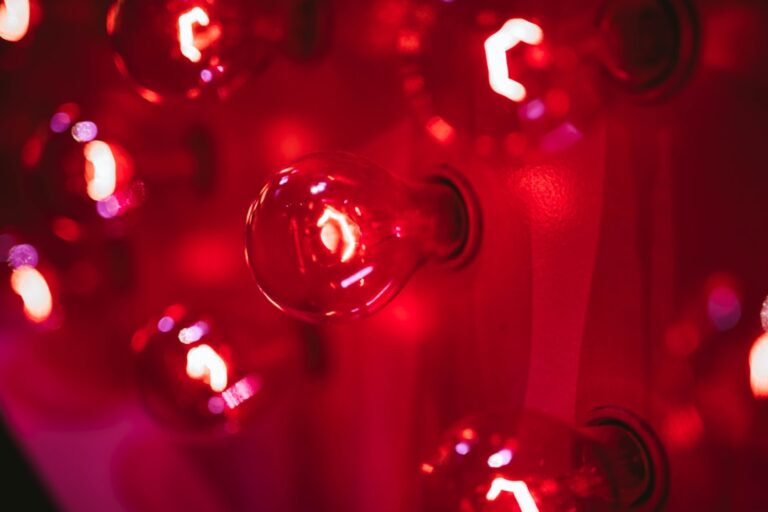
Photo by Virginia Berbece on Unsplash
By Michael Fleming, Editor · Evidence-reviewed · Last updated November 2026
Red light therapy may modestly improve how your skin looks, but as of 2026 no human evidence shows it slows biological aging or extends lifespan. You’ve probably seen the glowing face masks and full-body panels on social media, and you want to know if they’re worth the money. That’s a fair question. In fact, some of the more prominent red light therapy research published this year isn’t about wrinkles at all: it’s about children’s eyes, from journals like the British Journal of Ophthalmology. This guide separates what’s proven, what’s plausible, and what’s pure marketing.
Key Takeaways
- Red light therapy (photobiomodulation) is a plausible tool for skin appearance, but no human trial has shown it slows whole-body aging or extends lifespan.
- A 2026 multicentre study in the British Journal of Ophthalmology tracked repeated low-level red light for myopia in children aged 7 to 18 over three years, which is eye medicine, not anti-aging.
- If you try an at-home device, use eye protection, follow the manufacturer’s instructions, and judge results with consistent photos over a few months.
- Photodynamic therapy, which is FDA-approved for actinic keratoses according to a 2026 review in the Journal of the American Academy of Dermatology, is a different treatment that marketers often blur with red light therapy.
What Is Red Light Therapy, Exactly?
Red light therapy is the use of low-intensity red and near-infrared light on the body, with no drug involved. Researchers call it photobiomodulation. The light is visible red, invisible near-infrared, or a mix of both. Importantly, it doesn’t heat or burn tissue the way a surgical laser does.
Devices range from handheld wands and LED face masks to panels you stand in front of. Dermatology clinics also use higher-powered versions. However, “red light” on a label tells you very little. Wavelength, power output and treatment distance all vary from one product to the next.
How red light is supposed to work
The leading hypothesis centers on your mitochondria, the energy factories inside cells. According to this model, an enzyme called cytochrome c oxidase absorbs red and near-infrared light. That absorption is thought to nudge cellular energy production and trigger mild signaling stress. In other words, it may act as a gentle hormetic stressor.
If that idea sounds familiar, it’s the same logic behind exercise, sauna and cold exposure. We cover the concept in depth in our guide to how beneficial stress slows aging. But a mechanism isn’t an outcome. Plenty of interventions look elegant in a cell dish and do little in a living person.
Red Light Therapy vs. Photodynamic Therapy vs. Eye Treatments
Confusion between these three light treatments fuels a lot of misleading marketing. A clinic result for one gets borrowed to sell another. So here’s how they actually differ.
| Factor | Red light therapy (photobiomodulation) | Photodynamic therapy (PDT) | Repeated low-level red light (RLRL) |
|---|---|---|---|
| What it involves | Light alone, applied to skin or body | A photosensitizing drug plus a light source | Red light delivered to the eye through a dedicated device |
| Main goal | Skin appearance, recovery, general wellness claims | Destroying abnormal cells, such as actinic keratoses | Slowing myopia progression |
| How it works | Hypothesized mitochondrial signaling | Reactive oxygen species damage targeted cells | Still under study |
| Where it’s done | Home or clinic | Dermatology clinic | Prescribed and supervised by eye specialists |
| Anti-aging evidence | Limited, mostly small skin studies | Treats sun-damage lesions, not aging itself | None, this is a vision treatment |
The takeaway is simple. When an ad cites “clinically proven light therapy,” ask which of these three it means. Often, the honest answer is a different treatment than the one being sold.
What the Research Shows in 2026
The research published this year on red light is real and peer-reviewed. Still, very little of it addresses anti-aging directly. Here’s what each study actually tells you.
Red light for childhood myopia: three years of data
A 2026 multicentre real-world study in the British Journal of Ophthalmology evaluated repeated low-level red light for controlling myopia over three years. Participants were myopic children and adolescents aged 7 to 18, drawn from records at three hospitals. The researchers assessed both efficacy and safety.
This matters for one reason. It shows red light is being studied seriously as a medical tool in ophthalmology, although its eye safety is still debated: a 2026 laboratory evaluation in JAMA Ophthalmology found that some laser-based myopia devices reach recognized safety limits within the recommended three-minute session, and the senior author of the cohort study holds a financial interest in a device maker. However, a cohort study of children’s eyes tells you nothing about your skin, your mitochondria or your lifespan. As a design, a real-world cohort is suggestive, not definitive.
Red light for adult eye disease: a two-person pilot
A separate 2026 case series in the same journal tested twice-daily home red light sessions for six months in two adults with pathologic myopia. One patient showed functional improvement in visual acuity. The authors framed it as a pilot exploration.
Two patients is a starting point, not evidence of benefit. Furthermore, these were specialist devices used under medical care. Never point a consumer red light panel into your eyes hoping for a similar effect.
Photodynamic therapy: real results, different treatment
Two 2026 reviews in the Journal of the American Academy of Dermatology describe photodynamic therapy in detail. The mechanism review explains that PDT pairs a photosensitizer, most commonly 5-aminolevulinic acid or methyl aminolevulinate, with a light source and oxygen. That combination works primarily through singlet oxygen.
The clinical applications review notes that PDT is FDA-approved in the United States for actinic keratoses. Those are rough, sun-damaged patches that can become skin cancer. Because PDT requires a drug, its results don’t transfer to plain red light devices.
Not all visible light is friendly to skin
A 2026 review titled “Beyond UV: Visible Light and Pigmentation” adds useful nuance. It describes emerging evidence implicating visible light, especially high-energy visible light, in melasma and post-inflammatory hyperpigmentation. These conditions disproportionately affect people with darker skin types.
High-energy visible light sits at the blue-violet end of the spectrum, not the red end, and the review notes that in clinical studies blue-violet light induced dose-dependent pigmentation while red light produced none. Even so, the review is a reminder that “light is good for skin” is an oversimplification. If you have melasma, talk to a dermatologist before adding any light device to your routine.
Does Red Light Therapy Work for Skin Aging?
Skin is where red light therapy has its most plausible case. Small clinical studies over the past two decades have reported improvements in wrinkles and skin texture. But many were short, small, funded by manufacturers, or lacked a proper sham control. That’s why we’d call the evidence promising rather than proven.
Realistically, expect subtle changes at best. Red light therapy won’t replace the basics that have far stronger backing: daily sunscreen, a retinoid, not smoking, and good sleep. Our complete guide to skin aging science ranks those interventions by evidence strength.
Red light therapy is a possible add-on for your skin, not a foundation. That one sentence will save you a lot of money. If a device costs as much as a year of dermatologist visits, the dermatologist is likely the better investment.
What We Don’t Know Yet
Honesty builds trust, so here are the open questions as of November 2026. These gaps are big, and no marketing copy will mention them.
- Whole-body aging: No human trial has tested whether red light therapy changes biological age, epigenetic clocks or lifespan.
- Optimal dosing: Wavelengths, power and session lengths used across trials vary widely, so no agreed-upon home protocol exists.
- Device equivalence: A clinic-grade device and a cheap consumer mask may deliver very different amounts of light.
- Long-term safety: Years of regular home use haven’t been studied well, particularly around the eyes.
- Systemic effects: Claims about hormones, metabolism or brain health rest mainly on early or animal research.
Research indicates a real biological mechanism, but mechanisms are cheap and outcomes are expensive. We dug into the broader question in does red light therapy actually slow aging? The short answer hasn’t changed: not proven.
Practical Protocol: How to Try Red Light Therapy Safely
If you still want to experiment, that’s a reasonable choice for skin goals. Just do it like a careful self-experiment, not a leap of faith. Here is a cautious approach.
- Define your goal. Pick one target, such as fine lines on your face. Vague goals like “anti-aging” make results impossible to judge.
- Choose a device with published specs. Look for listed wavelengths and power output. Also check whether it’s FDA-cleared for its intended use, which speaks to safety, not guaranteed results.
- Protect your eyes every session. Wear the goggles provided, or buy a pair rated for the device’s light. Never stare into the panel.
- Follow the manufacturer’s instructions. Session time and distance vary by device. More light isn’t necessarily better, and overdoing it may blunt any effect.
- Take baseline photos. Use the same lighting, angle and time of day. Then repeat every few weeks.
- Be consistent, then reassess. Give it a few months of regular use. If you can’t see a difference in side-by-side photos, stop paying for it.
Some people like to use red light in the evening as part of a wind-down routine. If you want to know whether that routine actually changes your sleep, objective data beats a hunch. A tracker like the Oura Ring can show your overnight resting heart rate and HRV trends. For context on those numbers, see our resting heart rate by age chart.
Who should check with a doctor first
- Anyone taking medications or using skin products that increase light sensitivity
- People with melasma or a history of hyperpigmentation
- Anyone with a retinal condition or other eye disease
- People with a history of skin cancer or suspicious moles in the treatment area
- Anyone who is pregnant, simply because evidence in pregnancy is thin
Where Red Light Therapy Fits in Your Longevity Plan
Think of your longevity budget, both money and time, as a pyramid. At the base sit exercise, sleep, nutrition and blood pressure control. Those have decades of outcome data in humans. Red light therapy belongs near the top, alongside other optional experiments.
For example, the hours you’d spend standing in front of a panel each month could go toward strength training. That trade almost always wins. Then again, if your foundations are solid and you enjoy the ritual, a well-chosen device is a low-risk experiment.
The best longevity interventions are the ones with human outcome data, and red light therapy doesn’t have that yet. That could change. Until it does, treat it as cosmetic support, not a way to turn back your biological clock.
Affiliate Disclosure: The Longevity Dose may earn a small commission if you purchase through the links below, at no additional cost to you. We only recommend products we genuinely believe in. Learn more.
What We Recommend
- Mito Red Light panel. Best for full-body panels, as this guide describes: the guide names Mito Red Light as one full-body panel brand. Check the stated wavelengths and irradiance before buying, and keep the evidence limits in this guide in mind.
- Oura Ring. If you add red light to an evening routine, this ring tracks overnight HRV, resting heart rate and sleep. That lets you see whether anything actually changes, instead of guessing.
- Lifespan: Why We Age by David Sinclair. Red light marketing leans heavily on mitochondria and cellular energy. Dr. Sinclair’s book gives you the bigger framework for why we age, so you can judge those claims yourself.
Frequently Asked Questions
Does red light therapy reverse aging?
No human evidence shows that red light therapy reverses biological aging or extends lifespan as of 2026. Its most plausible benefit is a modest improvement in skin appearance. Treat it as a cosmetic add-on, not an anti-aging treatment for your whole body.
Is red light therapy the same as photodynamic therapy?
No. Photodynamic therapy combines a photosensitizing drug with light and is FDA-approved for actinic keratoses, according to a 2026 review in the Journal of the American Academy of Dermatology. Red light therapy uses light alone, so PDT results don’t apply to home red light devices.
Is red light therapy safe for your eyes?
Bright light aimed at the eyes carries risk, so always wear the protective goggles that come with your device. Red light treatments for eye conditions like myopia use specialist devices under medical supervision. Never try to recreate those treatments with a consumer panel.
How long does red light therapy take to show results on skin?
Any visible skin change, if it happens, typically takes consistent use over a few months. Take baseline photos in the same lighting and compare them every few weeks. If you see no difference after a fair trial, the device probably isn’t worth continuing.
Who should avoid red light therapy?
Check with your doctor first if you take light-sensitizing medications, have melasma, eye disease or a history of skin cancer. A 2026 review links visible light, mainly the blue-violet range, to melasma and hyperpigmentation, especially in darker skin types, and notes that red light did not induce pigmentation in clinical studies. A dermatologist can tell you whether a device is a sensible choice for your skin.
Liked This? Keep Reading.
Get the next post in your inbox. Real science on longevity, supplements, and fitness — no hype.
Drop your email below. Weekly. No spam. Unsubscribe anytime. ↓