
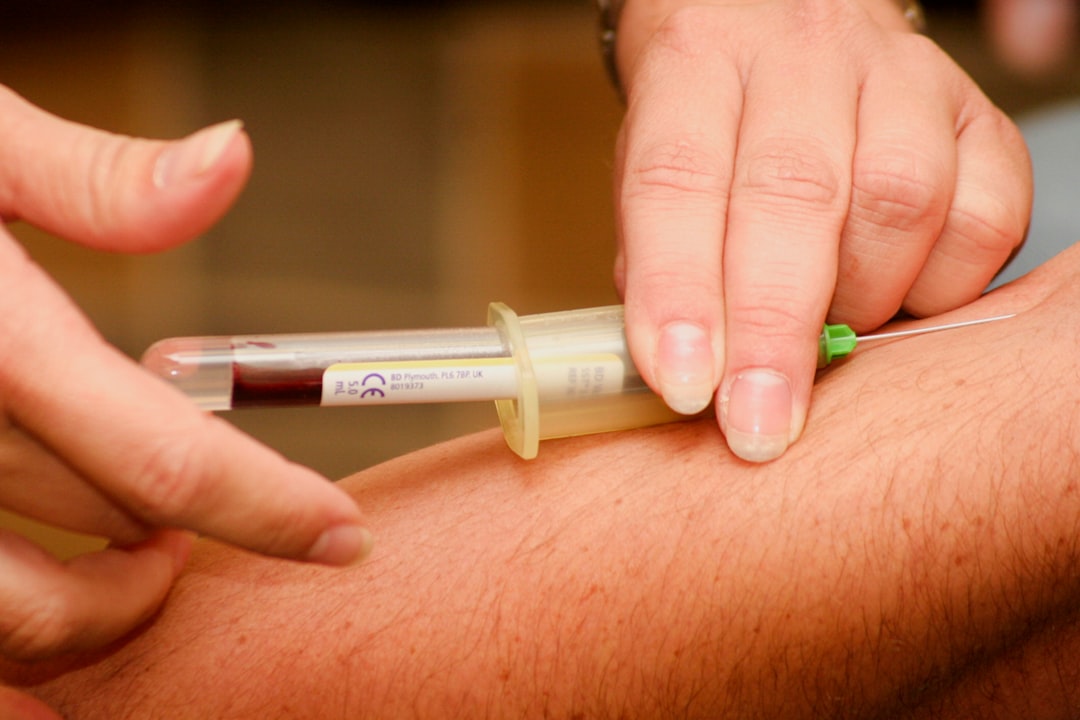
What Is ApoB? Why It Beats LDL for Heart Risk
Photo by Hush Naidoo Jade Photography on Unsplash
By The Longevity Dose Editorial Team · Evidence-reviewed · Last updated August 2026
When comparing ApoB vs LDL cholesterol as heart disease predictors, the research increasingly points in one direction: ApoB wins. Apolipoprotein B (ApoB) is a protein that sits on the surface of every atherogenic (artery-clogging) lipoprotein particle in your blood. One particle, one ApoB. That makes ApoB a direct count of every particle that can lodge in your artery wall, whereas LDL cholesterol only measures the cholesterol cargo inside one type of particle. As of 2026, a growing body of human evidence confirms that ApoB predicts cardiovascular risk more accurately than LDL-C, particularly when triglycerides are elevated or when LDL-C appears deceptively normal. Dr. Peter Attia has called ApoB the single most important lipid number to know. Here’s the science behind why he’s right.
Key Takeaways
- ApoB measures the total number of atherogenic lipoprotein particles in your blood, making it a more precise heart risk marker than LDL cholesterol in most adults.
- A 2026 study in JAMA (PMID 41949879) found ApoB is a superior marker of residual cardiovascular risk compared to LDL-C and non-HDL-C, even in patients already on lipid-lowering therapy.
- Standard labs often flag anything under 100 mg/dL as “normal,” but what the right personal target is depends on your overall risk profile — particle count, Lp(a), blood pressure and metabolic health — and is a question for a clinician who can see your full picture, not a single number a blog can hand you.
- You can have a “normal” LDL-C and still have dangerously high ApoB, a discordance that can go undetected for decades without this test.
Why ApoB Matters for Longevity
Cardiovascular disease remains the leading cause of death in adults over 40 worldwide. Most people get their LDL-C tested every year and think that number tells the whole story. It doesn’t. LDL cholesterol tells you how much cholesterol is packed inside LDL particles. But it says nothing about how many particles are actually out there, circulating and colliding with artery walls.
This distinction matters enormously. Two people can have identical LDL-C readings, yet one can carry far more LDL particles than the other — if the particles are smaller and denser, each holds less cholesterol, so the total cholesterol number looks the same while the particle count is dramatically higher. The person with more particles has more opportunities for arterial penetration, but a standard lipid panel won’t catch the difference. ApoB catches it. Because each atherogenic particle carries exactly one ApoB protein, your ApoB count equals your total atherogenic particle count. It’s that clean.
Longevity medicine specialists, including Dr. Attia (whose framework is detailed in his book Outlive), treat ApoB as a foundational biomarker alongside other key longevity markers like IGF-1, a critical longevity biomarker that most doctors never test. You can read the broader cardiovascular picture in our Heart Health After 40: ApoB, Lp(a) and Blood Pressure Guide. But the short version is this: lowering ApoB is one of the most evidence-backed strategies for reducing the risk of the disease that kills more people than anything else.
The Science Behind ApoB vs LDL Cholesterol
Lipoproteins are essentially oil-in-water delivery vehicles. Because fat and cholesterol don’t dissolve in blood, your body packages them inside protein-coated spheres. The relevant atherogenic particles include LDL, VLDL, IDL, and Lp(a). Each one carries exactly one molecule of apolipoprotein B on its outer shell. None of the HDL particles carry ApoB, which is why HDL doesn’t count in your ApoB score.
Atherosclerosis starts when ApoB-containing particles cross the endothelium (the thin lining of your artery wall) and become trapped — which is why tests like a coronary calcium score can reveal how much silent plaque has already built up. Once trapped, they oxidize, trigger inflammation, and start building the plaque that eventually causes heart attacks and strokes. More particles means more opportunities for this to happen. Fewer particles means fewer collisions. The physics are remarkably straightforward.
Why LDL-C Misses the Mark in Many People
LDL-C becomes especially unreliable in two common situations. First, when triglycerides are high, LDL particles tend to be smaller and denser, carrying less cholesterol per particle. Your LDL-C number drops, but your particle count stays high or even rises. Second, in people with insulin resistance or metabolic syndrome, the same phenomenon occurs. A 2026 study in JAMA Cardiology (PMID 42126847) directly assessed whether non-HDL cholesterol provides information beyond ApoB, and vice versa, finding that ApoB remains the more robust primary marker for atherosclerotic cardiovascular disease risk.
Lp(a) is another particle worth mentioning here. It also carries an ApoB molecule, and elevated Lp(a) independently amplifies cardiovascular risk. A 2026 European Heart Journal study (PMID 41568673) introduced a “risk-weighted ApoB” metric that adjusts for elevated triglyceride-rich lipoproteins and Lp(a), finding it outperforms standard lipid biomarkers in predicting coronary heart disease. If you’ve never had your Lp(a) tested, our post on whether an Lp(a) blood test is worth getting breaks down exactly why you should.
What the Research Actually Shows
The human evidence for ApoB as a superior risk marker is now substantial. Here are the key findings from 2026, stated honestly.
ApoB Beats LDL-C Even on Therapy
A 2026 analysis published in JAMA (PMID 41949879) evaluated the cost-effectiveness of using ApoB, non-HDL-C, and LDL-C as treatment targets in primary prevention. The researchers confirmed that ApoB is a superior marker of residual cardiovascular risk in patients already receiving lipid-lowering therapy. This is a big deal. It means that even if your LDL-C looks good on a statin, your ApoB may still be elevated and driving risk that the standard lab won’t show.
ApoB Discordance and Brain Health
A 2026 study in the Journal of the American Heart Association (PMID 42396799) investigated what happens when ApoB and LDL-C give conflicting signals, a scenario called discordance. Researchers found that high ApoB relative to LDL-C was independently associated with worse cognitive function, with cerebrovascular disease (damage to small blood vessels in the brain) acting as a mediating pathway. This connects ApoB directly to brain aging, not just heart disease. High ApoB isn’t only a cardiac risk. It may be quietly damaging the brain for years before any obvious symptoms appear.
Age Matters: Younger Adults Differ
A 2026 JAMA Network Open study (PMID 41945347) found that the incremental value of ApoB over traditional lipid markers is particularly strong in older adults, while the picture is less clear in younger adults. This doesn’t mean young people should ignore ApoB. But it does mean the clinical urgency of switching from LDL-C to ApoB testing is greatest for adults in midlife and beyond, exactly the population reading this post.
What the Evidence Doesn’t Yet Tell Us
To be honest with you: we have strong observational data linking high ApoB to cardiovascular events, and we have solid mechanistic evidence for why. What we have less of are randomized controlled trials that specifically targeted ApoB (rather than LDL-C) and measured hard outcomes like heart attacks. Most trials used LDL-C as the treatment target. The inference that ApoB targeting is superior is well-supported but not yet proven by a head-to-head RCT. That’s an important distinction.
How to Apply This: Getting Tested and Setting Targets
The practical action here is straightforward. You need to request an ApoB test. In the US, it’s not included in a standard lipid panel. You’ll need to ask for it specifically, either through your doctor or through a direct-to-consumer lab service.
How to Get an ApoB Test
- Ask your primary care doctor to add ApoB to your next blood draw. It’s covered by most insurance plans when cardiovascular risk is documented.
- Order it directly through services like Quest Diagnostics or LabCorp without a doctor’s order in most US states.
- Test every 6-12 months if you’re making dietary or medication changes, otherwise annually.
What Your ApoB Number Should Be
Standard lab reference ranges typically flag anything below 100 mg/dL as normal. What the right target is for you depends on your overall cardiovascular risk profile — including Lp(a), blood pressure, and metabolic health — and is a conversation worth having with a clinician who can see your full picture. For a detailed breakdown by risk level, see our post on ApoB optimal range.
How to Lower ApoB
Several interventions lower ApoB, with varying degrees of evidence.
- Statins: The most evidence-backed ApoB-lowering intervention in existence. The reduction they produce varies considerably by drug and dose — your prescribing doctor can tell you what to expect from a specific regimen based on your baseline. If your ApoB is high and your risk is meaningful, statins deserve a serious conversation with your doctor.
- Diet: Reducing saturated fat and replacing it with unsaturated fat lowers ApoB. Reducing refined carbohydrates lowers VLDL particle count, which also lowers ApoB. These effects are real but modest compared to medication.
- Exercise: Aerobic exercise, particularly Zone 2 training, improves metabolic health and reduces the small dense LDL fraction that elevates ApoB without raising LDL-C.
- PCSK9 inhibitors: Newer injectable drugs that dramatically reduce ApoB in patients who can’t tolerate statins or need deeper reduction — the degree of reduction depends on which drug, which dose, and your starting level. Very effective. Also very expensive, though coverage is improving.
- Ezetimibe: An inexpensive add-on medication that lowers ApoB further, often used alongside statins.
Note that none of the supplements commonly marketed for “cholesterol health,” including red yeast rice and plant sterols, have robust evidence for lowering ApoB meaningfully in high-risk individuals. Dietary changes and exercise are genuinely helpful, but don’t mistake them for a replacement of medical treatment when ApoB is significantly elevated.
Common Misconceptions About ApoB and LDL
Myth 1: “My LDL is normal, so I’m fine”
Normal LDL-C does not rule out high ApoB. In people with elevated triglycerides, insulin resistance, or high Lp(a), LDL-C can read perfectly normal while ApoB is dangerously elevated. This discordance is exactly what the 2026 JAMA research highlights as the primary limitation of using LDL-C alone.
Myth 2: “ApoB is only for people with heart disease”
ApoB is most useful precisely for people who don’t yet have heart disease. Atherosclerosis builds silently over decades. The damage from high ApoB starts accumulating in your 30s and 40s, long before any symptom appears. Catching and correcting it early is the entire point.
Myth 3: “Non-HDL cholesterol is just as good as ApoB”
Non-HDL-C is a meaningful improvement over LDL-C, but it’s not equivalent to ApoB. The 2026 JAMA Cardiology study (PMID 42126847) found that while both markers are useful, ApoB is the more precise measure of atherogenic particle burden. Non-HDL-C still captures cholesterol content, not particle number. In patients on therapy, where particle content and number diverge most, ApoB has the edge.
Myth 4: “Only your LDL matters, not the particle size or number”
Particle size and number matter considerably. Small, dense LDL particles are more prone to oxidation and arterial penetration than large, buoyant ones. And two people can have the same LDL-C with very different particle counts. ApoB captures both scenarios in a single, simple number. That’s the whole advantage.
Affiliate Disclosure: The Longevity Dose may earn a small commission if you purchase through the links below, at no additional cost to you. We only link products and books with a genuine research track record. Learn more.
What We Recommend
- Outlive: The Science and Art of Longevity — Dr. Peter Attia. Dr. Attia dedicates entire chapters to ApoB, particle testing, and why the standard lipid panel is inadequate for longevity-focused adults. If you want the most practical, medically rigorous framework for cardiovascular risk reduction, this is the book to read first.
- Lifespan: Why We Age — David Sinclair. Dr. Sinclair’s accessible deep-dive into the biology of aging provides the broader context for why cardiovascular risk factors like ApoB compound over time and why early intervention is the highest-leverage move you can make.
Frequently Asked Questions
What is ApoB and why is it better than LDL cholesterol?
ApoB (apolipoprotein B) is a protein found on the surface of every atherogenic lipoprotein particle in your blood, including LDL, VLDL, IDL, and Lp(a). Because each particle carries exactly one ApoB molecule, your ApoB level directly counts the total number of artery-clogging particles circulating in your blood. LDL cholesterol only measures the cholesterol content inside LDL particles, missing the particle count entirely. Multiple 2026 human studies confirm ApoB is a superior predictor of cardiovascular risk, especially when LDL-C and ApoB give conflicting signals.
What is a good ApoB level for longevity?
Standard lab reference ranges typically consider anything below 100 mg/dL as normal. What the right personal target is depends on your overall risk profile — Lp(a) levels, blood pressure, metabolic health — and is a question for a clinician who can see your labs, not a single figure a blog can hand you. For a full breakdown by risk tier, see our dedicated post on ApoB optimal range. Your doctor can help determine the right target based on your overall risk profile, including Lp(a) levels and blood pressure.
Can my LDL cholesterol be normal while my ApoB is high?
Yes, and this discordance is common. It happens most often in people with elevated triglycerides, insulin resistance, or metabolic syndrome, where LDL particles tend to be small and dense, carrying less cholesterol per particle. Your LDL-C number drops, but particle count stays high. A 2026 study in the Journal of the American Heart Association found that this discordance between ApoB and LDL-C is independently associated with worse cognitive function, suggesting the risks extend beyond heart disease to brain health.
How do I get an ApoB test?
Ask your primary care doctor to add ApoB to your next blood draw. It’s not included in a standard lipid panel and must be requested specifically. Most US insurance plans cover it when cardiovascular risk is documented. You can also order it directly through lab services like Quest Diagnostics or LabCorp in most states without a doctor’s order. Testing annually is reasonable for most adults, or every 6 months if you’re actively working to lower your number.
Does diet or exercise lower ApoB meaningfully?
Both help, but the magnitude is modest compared to medication. Reducing saturated fat, cutting refined carbohydrates, and improving insulin sensitivity through aerobic exercise do move ApoB in the right direction, though how much varies considerably by individual starting point and adherence. For adults with significantly elevated ApoB and meaningful cardiovascular risk, statins and other lipid-lowering medications produce far larger reductions and have decades of outcome data supporting their use. Diet and exercise are genuinely important, but they’re usually not sufficient as standalone interventions when ApoB is substantially elevated.
Is ApoB testing relevant if I’m already on a statin?
Especially relevant. A 2026 JAMA study confirmed that ApoB is a superior marker of residual cardiovascular risk in patients already on lipid-lowering therapy, compared to LDL-C and non-HDL-C. Statins lower LDL-C substantially, but some patients still have elevated ApoB despite seemingly good LDL-C numbers on treatment. Testing ApoB while on a statin helps your doctor assess whether your current therapy is sufficient or whether additional intervention (such as ezetimibe or a PCSK9 inhibitor) is warranted.
Liked This? Keep Reading.
Get the next post in your inbox. Real science on longevity, supplements, and fitness — no hype.
Drop your email below. Weekly. No spam. Unsubscribe anytime. ↓