What Is Autophagy? The Science of Cellular Self-Cleaning
What is autophagy? Autophagy is your body’s built-in cellular self-cleaning system — a biological process where your cells identify, break down, and recycle damaged proteins, dysfunctional organelles, and toxic debris that accumulate inside them over time. The word comes from the Greek for “self-eating,” and that’s essentially what happens: your cells digest their own worn-out components and repurpose the raw materials for repair and renewal. In 2016, Japanese cell biologist Dr. Yoshinori Ohsumi won the Nobel Prize in Physiology or Medicine for his foundational work uncovering how autophagy works at the molecular level — cementing it as one of the most important biological processes in aging science.
Why Autophagy Matters for Longevity
As you age, cellular waste accumulates faster than your body can clear it. Damaged mitochondria, misfolded proteins, and oxidized lipids pile up inside your cells — and this buildup is directly linked to many of the diseases most associated with aging. In fact, impaired autophagy has been implicated in Alzheimer’s disease, Parkinson’s disease, type 2 diabetes, cardiovascular disease, and cancer.
Furthermore, autophagy doesn’t just remove garbage. It also plays a critical role in immune defense, inflammation regulation, and even the quality control of your mitochondria — the energy-generating engines inside every cell. When autophagy slows down, your mitochondria become less efficient, inflammation rises, and cellular energy declines. These are core mechanisms in what researchers now call the hallmarks of aging.
Most importantly, autophagy appears to be a longevity lever you can actually influence through lifestyle. That’s what makes it so significant — and why it belongs at the center of any serious anti-aging strategy.
The Science Behind Autophagy
Here’s how the process works in plain English. Your cells are constantly under stress — from metabolic byproducts, environmental toxins, radiation, and the simple wear of daily function. Over time, damaged components accumulate that the cell can’t use and that may actively harm it.
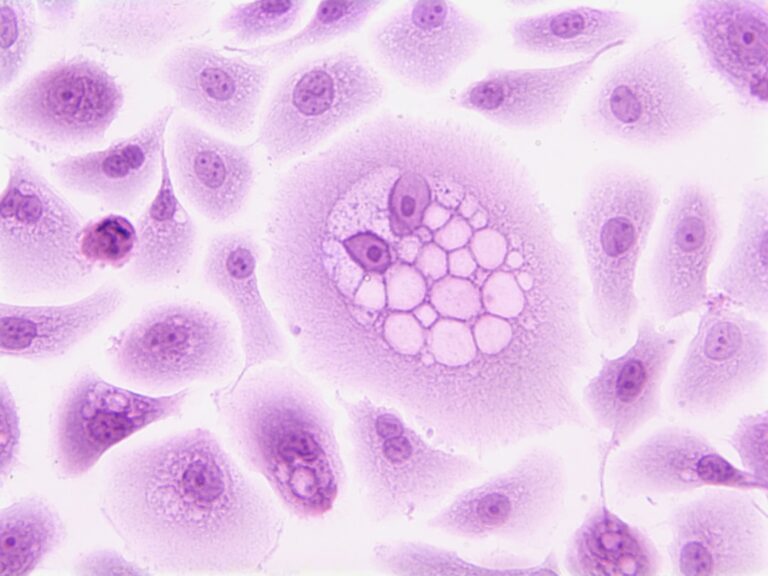
When autophagy is triggered, specialized structures called autophagosomes form inside the cell. Think of them as cellular garbage bags. They engulf the damaged material and then fuse with lysosomes — your cell’s recycling centers — which contain enzymes that break everything down into usable building blocks. Those components are then released back into the cell to build new, functional structures.
The mTOR Connection
The key on/off switch for autophagy is a protein complex called mTOR (mechanistic target of rapamycin). When mTOR is active — which happens when nutrients and energy are abundant — autophagy is suppressed. Your body is in growth and storage mode. In contrast, when mTOR is inhibited — during fasting, caloric restriction, or intense exercise — autophagy switches on. Your body enters a cleanup and recycling mode.
This is why fasting is so tightly linked to autophagy. When you stop eating, nutrient-sensing pathways detect the drop in amino acids and glucose. As a result, mTOR activity falls, and autophagy ramps up. A second pathway called AMPK (an energy-sensing enzyme) also activates autophagy when cellular energy is low — reinforcing the same mechanism from a different angle.
Mitophagy: The Specialized Version
A particularly important subtype of autophagy is mitophagy — the selective removal of damaged mitochondria. Healthy mitochondria are essential for cellular energy, and damaged ones generate excessive free radicals. Mitophagy acts as quality control for your mitochondrial network. Researchers like Dr. David Sinclair at Harvard have highlighted mitophagy as a central mechanism in the aging of cells, particularly in tissues with high energy demands like the heart, brain, and muscle.
What the Research Actually Shows
Here’s where you deserve full honesty. The evidence that autophagy extends lifespan is robust — in animal models. Studies in yeast, worms, flies, and mice consistently show that enhancing autophagy extends healthy lifespan. A landmark study published in Nature showed that mice with increased autophagy activity lived significantly longer and showed fewer age-related pathologies than controls.
However, direct human evidence is harder to collect. You can’t easily biopsy someone’s cells before and after fasting and measure autophagy output in a controlled clinical trial at scale. Most human autophagy research relies on proxy markers — measuring autophagy-related proteins like LC3-II and p62 in blood or biopsy samples. These markers suggest autophagy increases during fasting and exercise in humans, but they don’t yet prove it translates to longer human lifespan.
What we do have is strong observational and mechanistic evidence in humans. Research indexed on PubMed consistently links impaired autophagy to accelerated aging and age-related disease. Caloric restriction — the intervention most reliably shown to extend lifespan in animals — is now understood to work largely through autophagy activation. And intermittent fasting studies in humans show improvements in biomarkers associated with autophagy pathways, including reduced mTOR activity and increased AMPK signaling.
The bottom line: the mechanistic case for autophagy in human longevity is very strong. The direct clinical proof in humans is still developing. That’s an honest picture — and it’s why lifestyle strategies that promote autophagy are worth pursuing, even while we await larger human trials.
How to Trigger Autophagy: The Practical Protocol
The good news is that the most effective autophagy triggers are free and available to everyone. Here’s what the current evidence supports.
Fasting and Time-Restricted Eating
Fasting is the most well-studied autophagy trigger in humans, and if you’re curious whether intermittent fasting actually helps you live longer, the evidence points to autophagy as a key mechanism. Autophagy markers appear to rise during extended fasting periods, though the exact threshold varies by individual, age, and metabolic health — and no single hour mark applies to everyone. A 16:8 intermittent fasting protocol — eating within an 8-hour window — is among the approaches studied for autophagy marker changes in humans, though whether it is sufficient for any given individual depends on factors including metabolic health and timing consistency.
Longer multi-day fasts likely produce deeper autophagy, but they carry meaningful risks including muscle protein breakdown and electrolyte imbalances — risks that grow with duration and that make medical supervision important. How often to fast, and for how long, depends on your metabolic health, your schedule, and what your body tolerates — which is a conversation worth having with a clinician who knows your history, not a frequency a blog can prescribe. Always consult a physician before extended fasting, especially if you have metabolic conditions. If you want a deeper look at how different fasting approaches compare, fasting protocols for longevity breaks down the evidence across methods.
Exercise
Both endurance exercise and resistance training stimulate autophagy — through different but complementary pathways. Zone 2 cardio (sustained moderate-intensity aerobic exercise) appears particularly effective at triggering mitophagy in muscle and cardiac tissue. A 2012 study by Dr. Beth Levine at UT Southwestern found that exercise-induced autophagy in mice was required for the metabolic benefits of physical activity — a finding that has since been extended to human exercise research.
Practically speaking, regular Zone 2 cardio sessions — sustained enough to keep you in a moderate aerobic effort — appear to be an effective autophagy-promoting approach, with the right duration and frequency depending on your fitness baseline and recovery capacity. Combining it with periodic resistance training further supports mitochondrial quality control.
Sauna Exposure
Emerging evidence suggests that repeated heat exposure — such as sauna use — may also upregulate autophagy pathways, likely via heat shock proteins. While this evidence is less mature than fasting and exercise data, it adds to the case for sauna as a longevity practice. Finnish epidemiological data on sauna use and cardiovascular mortality is among the strongest in this area.
Dietary Approaches
Beyond fasting timing, certain dietary strategies may support autophagy:
- Protein restriction windows: Keeping protein low during the fasting window avoids mTOR re-activation. Even modest protein intake (especially amino acids like leucine) can suppress autophagy.
- Coffee: Research suggests caffeine may stimulate autophagy independently of fasting, though the effect size in humans remains under study.
- Spermidine: Found in aged cheese, wheat germ, and mushrooms, spermidine has shown autophagy-inducing properties in both cell studies and animal models. Early human observational data is promising, but clinical trials are still ongoing. It also appears in several evidence-reviewed longevity supplement roundups for its emerging research profile.
Common Misconceptions About Autophagy
Myth 1: “Autophagy starts after just a few hours of fasting”
This claim circulates widely on social media — and it’s not accurate. Most evidence suggests meaningful autophagy upregulation requires an extended fasting period in healthy humans — skipping a single meal is unlikely to be sufficient, and the threshold differs from person to person. The exact threshold varies significantly by individual. Skipping breakfast does not guarantee autophagy; a consistent, extended fasting window does.
Myth 2: “You can take a supplement to trigger autophagy”
There is no supplement currently proven to reliably trigger autophagy in humans the way fasting and exercise do. Compounds like resveratrol, quercetin, and spermidine show promise in cell and animal studies, but human evidence is limited. Rapamycin — an mTOR inhibitor — is the pharmacological tool closest to a proven autophagy activator, but it carries significant immune-suppression risks and is not appropriate for unsupervised use. The same scrutiny applies to other popular longevity compounds; if you’re wondering whether NMN actually works, the evidence is similarly more nuanced than the marketing suggests — and the same is true for metformin as a longevity drug, where the evidence is promising but still far from settled. The National Institute on Aging is currently funding trials to evaluate it in healthy aging populations.
Myth 3: “More autophagy is always better”
Autophagy must be carefully balanced. Excessive or dysregulated autophagy can be harmful — it has been associated with cell death and, paradoxically, with helping cancer cells survive under nutrient stress. The goal is optimized, cycling autophagy — periods of activation followed by periods of normal cellular activity. This is another reason why chronic caloric restriction carries risks compared to intermittent fasting cycles.
Myth 4: “Coffee breaks your fast and stops autophagy”
In contrast to what many people assume, black coffee (without cream, sugar, or MCT oil) is unlikely to significantly suppress autophagy during a fasting window. Caffeine may actually mildly promote autophagy through AMPK activation. However, adding any caloric content to coffee will begin to re-activate mTOR and dampen the autophagy response, so strict black coffee is the only fast-compatible version.
Frequently Asked Questions
How long do you need to fast to trigger autophagy?
Most research suggests autophagy markers begin rising meaningfully only after a sustained fasting period in healthy adults — the precise timing varies by individual, and no single hour mark has been established as a universal threshold. Deeper autophagy likely requires 24+ hours, but everyday longevity protocols don’t require extreme fasting. A consistent 16:8 fasting window — eating between noon and 8pm, for example — is a practical and evidence-supported starting point for most healthy adults.
Does sleep count toward your fasting window?
Yes — sleep is a natural fasting period, and autophagy is active during sleep. This is one of the reasons sleep quality and duration are so tightly linked to cellular repair. A 10pm last meal and 6am breakfast gives you an 8-hour fast. Extending that by delaying breakfast to 10am gives you a 12-hour fast with minimal behavioral disruption.
Can you measure autophagy directly?
Not yet — at least not in a practical, consumer-accessible way. Autophagy markers like LC3-II and p62 can be measured in research settings using blood or tissue biopsies, but there is no validated consumer test that accurately measures your real-time autophagy status. Be skeptical of any product claiming to “test your autophagy levels.”
Is autophagy relevant if you’re over 50?
It’s actually more relevant. Autophagy naturally declines with age — which is one reason aging cells accumulate more damage. Because of this, the interventions that support autophagy (fasting, exercise, heat exposure) may have an even greater return on investment for adults over 50. The biology doesn’t stop working — it just needs more deliberate support as you get older. It’s also worth understanding how autophagy interacts with other age-related processes, such as the accumulation of senescent cells that senolytics aim to clear — another active area of longevity research.
Liked This? Keep Reading.
Get the next post in your inbox. Real science on longevity, supplements, and fitness — no hype.
Drop your email below. Weekly. No spam. Unsubscribe anytime. ↓