Grip Strength Test by Age: Targets, Tools & How to Improve
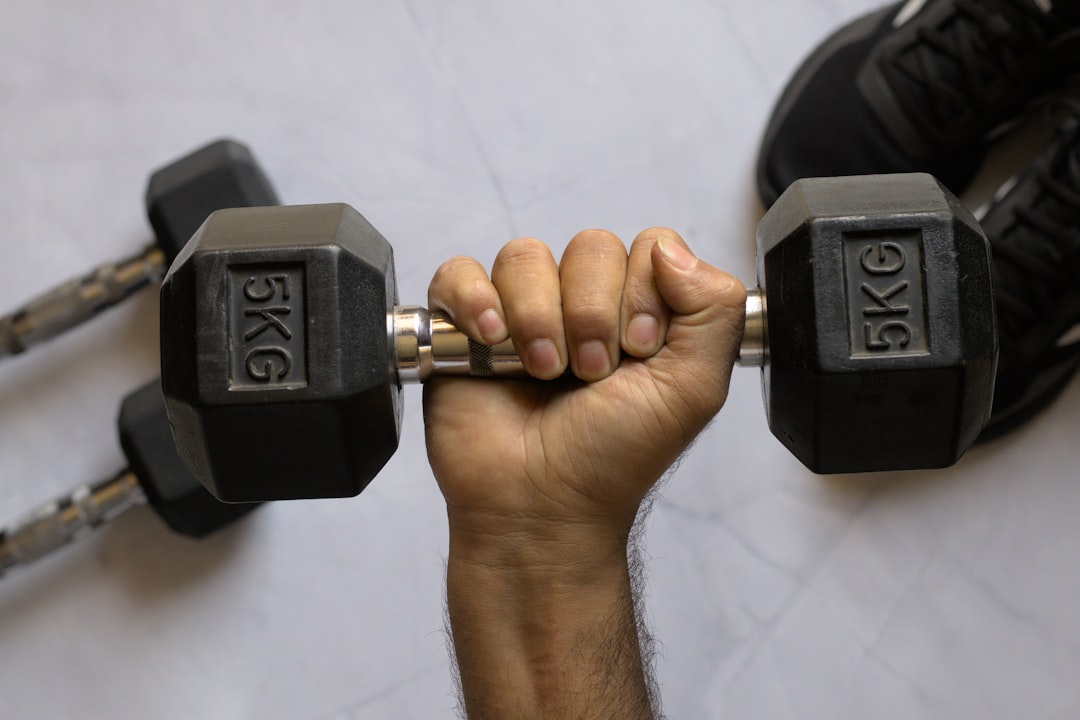
Photo by VD Photography on Unsplash
By The Longevity Dose Editorial Team · Evidence-reviewed · Last updated September 2026
Your grip strength by age is one of the most powerful and underrated windows into your long-term health, and the test takes about 30 seconds. A single squeeze on a hand dynamometer tells researchers, and your doctor, a surprising amount about your cardiovascular risk, cognitive trajectory, and all-cause mortality risk. In the PURE study, which followed nearly 140,000 adults across 17 countries, each 5 kg drop in grip strength was associated with a 16 percent higher risk of death from any cause (hazard ratio 1.16, 95% CI 1.13 to 1.20) (PMID 25982160). A 2026 systematic review in the British Journal of Sports Medicine pooled 94 cohort studies and confirmed that simple muscular fitness tests, handgrip included, reliably predict long-term health conditions in adults (PMID 41667153). This guide gives you the real reference numbers by age and sex, shows you exactly how to test at home, and lays out what to do if your number is lower than it should be.
Key Takeaways
- In the PURE study of nearly 140,000 adults, each 5 kg lower grip strength was tied to a 16 percent higher risk of death from any cause (PMID 25982160).
- A 2026 meta-analysis of 94 cohort studies confirmed that grip strength reliably predicts long-term health conditions, including cardiovascular disease (PMID 41667153).
- The reference chart below shows population mean grip strength by age and sex; what counts as healthy depends on your sex, age, body size, and testing protocol, so read your number against the right group and against your own trend.
- You can test grip at home with a hand dynamometer for under $50, or ask your doctor to run it at your next physical.
- Grip strength is a consequence of overall musculoskeletal health, so the most effective way to improve it is progressive resistance training, not grip gadgets alone.
Why Grip Strength Predicts Far More Than Hand Strength
Grip strength is not really about your hands. Think of it as a proxy biomarker for total muscle quality, neural drive, and systemic health. When researchers want a fast, cheap, reproducible measure of physical capacity, the handgrip dynamometer is consistently what they reach for.
A 2026 cross-sectional study in Geriatric Nursing (PMID 41621147) examined 384 community-dwelling adults aged 65 and older in Spain. Lower grip strength correlated with worse quality-of-life scores, poorer functional status, and higher clinical risk stratification. In other words, grip strength was not just reflecting hand health. It was tracking the overall aging trajectory across multiple health domains at once.
This is why longevity researchers treat grip strength as a front-line longevity biomarker. It is fast, inexpensive, and carries real predictive weight. The data behind it is much stronger than the data behind many expensive tests people chase.
Grip Strength Norms by Age and Sex: The Reference Chart
The table below shows mean grip strength by age and sex from a population-based normative study using a Jamar-type hydraulic dynamometer, measured in kilograms of force on the dominant hand (PMID 21492469). Read these as the middle of the healthy range for each group, not a diagnostic cutoff. Your own reading is best interpreted against your trend over time and by your doctor in the context of your full health picture.
| Age Group | Men: mean grip (kg) | Women: mean grip (kg) |
|---|---|---|
| 20–29 | 47 | 30 |
| 30–39 | 47 | 31 |
| 40–49 | 47 | 29 |
| 50–59 | 45 | 28 |
| 60–69 | 40 | 24 |
| 70+ | 33 | 20 |
Two things are worth noticing. Grip holds fairly steady through the working years and then falls off more sharply after 60, and the male and female curves stay clearly separated at every age, which is why you should always compare against a same-sex reference. One important caveat: a 2026 study in the Journal of Cachexia, Sarcopenia and Muscle established separate reference values for Asian populations, confirming that normative ranges differ meaningfully by ethnicity and body composition (PMID 41674016). Most classic tables were built on Western populations, so if your background differs, treat the chart as a rough guide rather than a precise line.
What the Research Shows: Grip Strength and Longevity Risk
The research here is genuinely strong, especially by longevity-science standards, where single small studies often get over-hyped. Grip strength is different. The evidence base is large, replicated, and consistent across countries and decades.
The clearest single number comes from the PURE study cited above: after adjustment, each 5 kg reduction in grip strength was associated with a 16 percent higher risk of all-cause death and a 17 percent higher risk of cardiovascular death (PMID 25982160). The 2026 British Journal of Sports Medicine meta-analysis then pooled 94 cohort studies and found that lower muscular fitness, handgrip included, was associated with higher risk across multiple long-term health outcomes (PMID 41667153). That is a systematic review of human cohort data, not a single lab.
Separately, a 2026 multicenter study of over 12,000 participants worked to standardize how grip strength is used in sarcopenia diagnosis under the Global Leadership Initiative on Sarcopenia, and found that muscle-specific strength, essentially grip adjusted for body size and muscle mass, was more clinically relevant than raw grip force alone (PMID 41618519). That nuance matters. A large person with a 40 kg grip may be in worse shape than a smaller person at 32 kg.
Grip strength also connects directly to muscle mass and longevity. Losing grip strength is usually a sign that overall skeletal muscle is declining, which tracks closely with metabolic and cardiovascular risk. The two biomarkers move together.
How to Test Your Grip Strength at Home
You do not need a clinic. A basic hand dynamometer, available online for $25 to $50, gives a reliable result if you follow proper protocol. Cheap squeeze balls and spring grippers do not measure force accurately enough to be useful for tracking.
The Standard Testing Protocol
- Sit upright in a chair with your feet flat on the floor. Your elbow should be bent at a right angle, forearm resting on your thigh or a table.
- Set the dynamometer to fit your hand. The handle should sit at the base of your fingers, not in your palm.
- Squeeze as hard as you can for a few seconds. Do not hold your breath or brace your whole body.
- Test both hands and record a few trials on each, resting between squeezes.
- Take your best score from the dominant hand as your result, and compare it to the age-matched chart above.
A 2026 study in Cureus assessed grip force transducer accuracy in healthy volunteers and confirmed that proper positioning and protocol consistency are essential to a reliable reading (PMID 42403849). Position matters more than most people realize. A small change in elbow angle can shift your score, which is why the standardized right-angle elbow position exists. Inconsistent positioning between tests makes it impossible to know whether a change in your number reflects real change in your strength.
Test yourself every few months and track the trend. A single number is interesting. A trend over time is genuinely useful information.
Practical Protocol: How to Improve Your Grip Strength
Here is the honest truth about grip training: grip strength is mostly a downstream consequence of overall upper-body and total-body strength. A grip strengthener alone will not move the needle much if you are not also building baseline muscle. That said, targeted grip work adds value on top of a solid training base.
This is where strength training for longevity becomes directly relevant. The same resistance training that protects muscle mass and metabolic health also drives grip strength upward. The two goals are not separate.
The Four-Pillar Grip Protocol
- Compound pulling movements (priority 1): deadlifts, barbell rows, pull-ups, and dumbbell rows build grip as a direct byproduct. Use a double-overhand grip for as long as you can before reaching for straps, to keep the grip stimulus.
- Farmer carries (priority 2): carry heavy dumbbells or kettlebells for distance. Few exercises build crushing grip strength faster in less time.
- Dead hangs (priority 3): hang from a pull-up bar for as long as you can hold good form, and progress over time. Dead hangs also decompress the spine and support shoulder health.
- Plate pinches (priority 4): pinch two weight plates together between fingers and thumb and hold. This targets the fingers and thumb, filling a gap the other movements miss.
Creatine monohydrate is worth mentioning here. It is one of the most well-researched supplements for muscular strength and power output, and evidence supports grip-strength improvements when it is combined with resistance training. If you want a reliable option, Thorne Creatine Monohydrate is NSF Certified for Sport, meaning it has been third-party tested for purity and label accuracy.
What We Don’t Know Yet
Grip strength research is robust by longevity-science standards, but a few important gaps remain.
First, most large normative datasets were built in Western, European populations. The 2026 Asian reference-values study helps fill that gap, but population-specific thresholds for South Asian, African, Latin American, and other groups are still underdeveloped. Using the wrong reference range could produce false reassurance or unnecessary worry.
Second, we have strong evidence that lower grip strength predicts worse outcomes, but the direction of cause is harder. Does improving grip strength actually reduce mortality risk, or is grip mainly a marker of underlying health that training cannot fully reverse? The PURE authors were explicit that further research is needed to test whether improving strength reduces mortality (PMID 25982160). The 94-study meta-analysis confirms prediction, not necessarily causation.
Third, how much of grip strength’s predictive value is independent of other fitness markers like VO2 max and walking speed as a longevity indicator is not fully resolved. These biomarkers are correlated, so attributing unique predictive value to grip alone is genuinely complex.
That said, the practical recommendation does not change: testing is low-cost, training grip and overall strength is clearly beneficial, and much like what the single-leg balance test reveals about lifespan, the downside of improving your muscle health is essentially zero. Pairing it with a broader focus on mobility, balance, and fall prevention makes the case for strength training even stronger.
Affiliate Disclosure: The Longevity Dose may earn a small commission if you purchase through the links below, at no additional cost to you. We only link products and books with a genuine research track record. Learn more.
What We Recommend
- Hand Grip Dynamometer. To run the test in this post at home, a hand dynamometer gives you an actual kilogram or pound reading you can track over time, the same measurement used in the research. A digital model that records peak force is easiest to log.
- Thorne Creatine Monohydrate. The single most research-backed supplement for supporting muscle strength and power output, including grip. NSF Certified for Sport, so you know exactly what you are getting.
Sources
- Massy-Westropp NM, et al. Hand Grip Strength: age and gender stratified normative data in a population-based study. BMC Res Notes. 2011;4:127. PMID 21492469.
- Leong DP, et al. Prognostic value of grip strength: findings from the Prospective Urban Rural Epidemiology (PURE) study. Lancet. 2015;386(9990):266–273. PMID 25982160.
- Clinical importance of simple muscular fitness tests to predict long-term health conditions in adults: a systematic review of 94 cohort studies. Br J Sports Med. 2026. PMID 41667153.
- Operationalizing the Global Leadership Initiative in Sarcopenia: Muscle-Specific Strength. J Cachexia Sarcopenia Muscle. 2026. PMID 41618519.
- Quality of life, grip strength, health indicators, and clinical risk in older adults. Geriatr Nurs. 2026. PMID 41621147.
- Asian Reference Values for Handgrip Strength, Gait Speed, and Five-Times-Sit-to-Stand. J Cachexia Sarcopenia Muscle. 2026. PMID 41674016.
- Estimation of Hand Grip Strength Using a Grip Force Transducer in Healthy Volunteers. Cureus. 2026. PMID 42403849.
Frequently Asked Questions
What is a normal grip strength for a 50-year-old man?
In the population normative data, mean dominant-hand grip strength for men aged 50 to 59 was about 45 kg (PMID 21492469). That is an average, not a pass-or-fail line: what counts as healthy for you depends on your body size and the reference population, and your trend over time matters more than a single reading. Your doctor can interpret your number against an appropriate reference group.
Can grip strength actually predict how long you’ll live?
It predicts risk rather than destiny. In the PURE study of nearly 140,000 adults, each 5 kg lower grip strength was associated with a 16 percent higher risk of all-cause death (PMID 25982160), and a 2026 meta-analysis of 94 cohort studies confirmed grip predicts multiple long-term health outcomes. Grip strength does not determine lifespan directly, but it tracks overall musculoskeletal and metabolic health in a clinically meaningful way.
What tool do I need to test grip strength at home?
You need a hand dynamometer, a device that measures force in kilograms or pounds when you squeeze it. Basic models suitable for home tracking cost $25 to $50 online. Squeeze balls and spring grippers do not provide accurate force measurements and cannot be compared to normative tables.
Is low grip strength the same as sarcopenia?
Not exactly, but the two are closely related. Sarcopenia is the progressive loss of skeletal muscle mass and function, and grip strength is one of the key diagnostic criteria in clinical sarcopenia frameworks, including the 2026 Global Leadership Initiative on Sarcopenia. Low grip strength is a strong warning sign that muscle loss may be occurring, but a formal diagnosis also requires assessment of muscle mass.
How quickly can grip strength improve with training?
Grip strength responds to consistent resistance training through progressive neuromuscular adaptation and muscle growth, both of which begin accumulating once training load is applied regularly. Compound pulling movements like deadlifts and rows tend to drive the fastest progress. Targeted grip exercises such as farmer carries and dead hangs add benefit on top of a general strength program.
Does grip strength matter differently for women than men?
The normative reference ranges differ substantially between sexes because of differences in muscle mass and body composition, which is why the chart above separates them. The predictive relationship between grip strength and health outcomes, however, holds for both men and women across the literature. Women should compare their scores against female reference values rather than male averages.
Liked This? Keep Reading.
Get the next post in your inbox. Real science on longevity, supplements, and fitness — no hype.
Drop your email below. Weekly. No spam. Unsubscribe anytime. ↓