Strength Training for Longevity: The Evidence Is Overwhelming
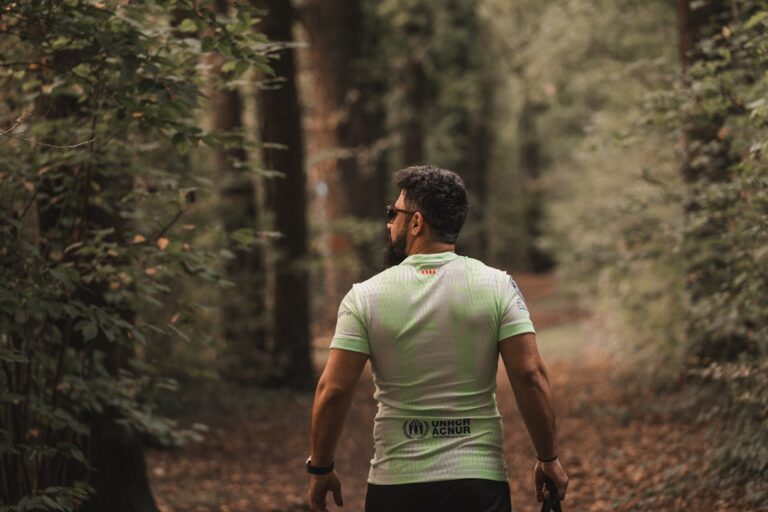
Photo by Vitaly Gariev on Unsplash
By The Longevity Dose Editorial Team · Evidence-reviewed · Last updated June 2026
Strength training for longevity isn’t a nice-to-have. It’s the single most powerful physical intervention for surviving your 70s, 80s, and beyond with your body and mind intact. Not fasting. Not cold plunge after strength training. Not any supplement stack. Lifting weights, done consistently, does things to your physiology that nothing else can replicate. I’ve spent years reading this research and my position is firm: if you are over 35 and not doing structured resistance training at least twice a week, you are aging faster than you need to. Full stop.
Key Takeaways
- Low muscle strength is an independent predictor of all-cause mortality — a 2018 analysis in the British Journal of Sports Medicine found that muscular weakness is associated with a significantly higher risk of death from all causes, cardiovascular disease, and cancer.
- Adults begin losing muscle mass in their 30s, and the rate accelerates sharply after 60 — a process that compounds quietly for decades before most people notice it. This process, called sarcopenia, is not inevitable — but it requires active resistance training to prevent.
- Resistance training twice per week, targeting all major muscle groups, is the minimum effective dose supported by current evidence for longevity-related outcomes.
- Muscle mass is not just about strength — it functions as a metabolic organ, a glucose disposal system, and a reservoir of amino acids during illness. Most people dramatically underestimate how much depends on it.
Why Muscle Is the Most Undervalued Longevity Organ You Have
Most people think of muscle as a cosmetic concern. You want to look better, so you lift. That framing is completely backwards, and it’s holding people back from taking this seriously.
Muscle is a metabolic organ. It’s your body’s primary disposal site for blood glucose. It produces signaling molecules called myokines that regulate inflammation, brain function, and immune activity. And it’s your survival reserve when things go wrong — a serious illness, a surgery, a long hospitalization. The people who come out of those events with their independence intact are almost always the people who had the most muscle going in.
Dr. Peter Attia has been making this argument loudly for years. In his framework, he asks patients to imagine what physical capacity they want to have at age 85. He calls it the “Centenarian Decathlon.” Then he works backwards, because the fitness you have at 85 was built in your 50s and 60s. You can’t improvise it at the end.
This reframe matters. You’re not training to look good this summer. You’re training to be able to get up off the floor at 80. Those are very different motivations, and the second one is far more likely to keep you consistent.
What the Evidence on Strength Training for Longevity Actually Shows
Let me be specific, because this is where most longevity content gets lazy. Evidence shows that muscle strength, not just muscle mass, predicts survival. Grip strength in particular has been validated as a biomarker of overall physiological health in dozens of large population studies, and understanding your own numbers — including grip strength targets by age and how to test and improve them — is a practical place to start.
A major 2018 systematic review and meta-analysis published in the British Journal of Sports Medicine — covering over 1.5 million participants — found that low muscular strength was associated with higher all-cause mortality, cardiovascular disease mortality, and cancer mortality. The association held even after controlling for cardiorespiratory fitness. In other words, grip strength predicted death independently of how good your VO2 max was.
Beyond mortality data, resistance training directly addresses several of the hallmarks of aging at the cellular level. It activates mTOR signaling to drive muscle protein synthesis. It improves mitochondrial biogenesis. It reduces systemic inflammation. And evidence from researchers including Dr. Stuart Phillips at McMaster University indicates that it counteracts the cellular senescence process in muscle tissue specifically.
The body of research on this is not thin or preliminary. It’s decades deep and it points in one direction.
The Sarcopenia Timeline You Need to Understand
Sarcopenia — the age-related loss of muscle mass and function — begins earlier than most people expect. Research indicates you start losing meaningful muscle mass in your 30s. The rate of loss is meaningful in midlife, then it accelerates after 60. By your 70s, untreated sarcopenia accelerates to the point where loss becomes visible and functionally serious year over year — a trajectory covered in detail in our complete guide to muscle loss after menopause.
This loss isn’t just about strength. Sarcopenia is independently associated with insulin resistance, metabolic dysfunction, falls, fractures, cognitive decline, and early death. It compounds the biological stressors that accelerate aging at every level.
The intervention that stops and partially reverses this process is resistance training. Not walking. Not yoga (though both have value). Progressive overload against resistance, applied consistently over years. Nothing else produces the same adaptive response in muscle tissue.
The Counterargument: “Isn’t Cardio More Important for Longevity?”
This is the one I hear most often, and I understand why. The cardiovascular fitness literature is enormous. VO2 max is a remarkable predictor of lifespan — I’ve written about exactly why at this piece on VO2 max as a longevity predictor — and cardio gets far more cultural airtime than lifting.
But here’s where the framing breaks down. The question isn’t cardio versus strength. The research is clear that both matter, and they matter in different ways for different failure modes of aging.
Cardio primarily protects your cardiovascular system and metabolic health. Strength training primarily protects your musculoskeletal system and physical function. In Dr. Attia’s framework, the leading killers of lifespan — cancer, cardiovascular disease, metabolic dysfunction, and neurodegeneration — are the “four horsemen.” And Zone 2 cardio addresses some of those risks. But strength training is the tool that determines whether you can actually live in your body as you get older.
Falls and their downstream consequences kill people. A hip fracture in an older adult carries a sobering one-year mortality risk — the mechanism is well documented: prolonged immobility, hospital-acquired complications, and the muscle reserve that was never built to support recovery. Low muscle mass is one of the primary risk factors for falls. This is not a marginal outcome. It’s a leading cause of functional decline and death in older adults, and it’s substantially preventable.
The real counterargument to strength training for longevity doesn’t hold up under scrutiny. It was always a false binary.
Where I Think Most People Are Getting This Wrong
Here’s my honest take after following this space closely: most health-conscious adults who do lift weights are undertraining for longevity purposes. They’re doing low-load, machine-based, comfort-zone workouts that don’t produce enough stimulus to drive meaningful adaptation.
Progressive overload is the mechanism. Your muscles adapt to the demands you place on them. If the demands don’t increase over time, the adaptation stops. This doesn’t mean you need to train like an athlete in your 40s and 50s. But it does mean you need to be training with enough intensity to be genuinely challenged.
Dr. Brad Schoenfeld, one of the most cited researchers in muscle physiology, has consistently shown in his work that training within a range of 6-30 repetitions per set to near-failure is effective for hypertrophy. What matters is proximity to failure, not the specific rep range. That’s practically useful information. You can train with moderate loads if you push close to your limit on each set.
I’d also argue most people are under-weighting the compound movements. Squats, deadlifts, rows, presses, carries. These patterns train the movements that matter for real-world function. They build the hip strength that prevents falls. They build the posterior chain that protects your spine. Machine leg extensions don’t replace them.
If you’re looking for a single supplement to support this training, Thorne Creatine Monohydrate is the one I’d actually recommend — NSF Certified, about as well-studied as a supplement can be, with consistent evidence for both muscle and cognitive benefits across decades of research, and especially worth understanding if you’re a woman over 50 (see our full guide on creatine for women over 50: dosing, safety, and real benefits).
What You Should Actually Do Based on the Evidence
I want to be practical here, not just theoretical. So here’s what the evidence supports as a minimum effective protocol for longevity-oriented strength training in 2026:
- Frequency: 2-3 sessions per week, full body or upper/lower split
- Volume: Enough weekly sets per muscle group that you are consistently challenging each pattern — distributed across sessions so recovery is possible between them
- Intensity: Train close enough to muscular failure on most sets that the last few reps are genuinely difficult — this proximity to your limit is what drives adaptation, without pushing so far that recovery suffers
- Movement patterns: Prioritize hip hinge (deadlift variation), squat, push, pull, and loaded carry every week
- Protein: How much protein you need depends on your bodyweight, your training load, and your kidney function — a clinician who can see your labs is better placed to give you a personal target than any single figure a blog can hand you
- Progression: Add weight, reps, or sets over time. If you’re not progressing, you’re not adapting.
Age matters for recovery, not for the fundamental stimulus. Research indicates that older adults need the same or higher training stimulus to drive muscle adaptation — but they may need more recovery time between sessions. Adjust frequency, not intensity.
If you want a deeper framework for thinking about this, Dr. Peter Attia’s book Outlive: The Science and Art of Longevity is the most rigorous and practical longevity resource I’ve encountered. His section on the Centenarian Decathlon concept is worth the price of the book alone.
Pair your training with your broader longevity stack. Strength training has been shown to work synergistically with metabolic interventions. I’ve written about how fasting protocols interact with muscle preservation — it’s a nuanced relationship that matters if you’re doing both.
Muscle mass is not vanity. It’s infrastructure. The evidence for building and preserving it across your lifespan is as strong as any intervention in the longevity toolkit, and it has been hiding in plain sight in every gym for decades. Start now. Add weight over time. Don’t stop.
Affiliate Disclosure: The Longevity Dose may earn a small commission if you purchase through the links below, at no additional cost to you. We only link products and books with a genuine research track record. Learn more.
What We Recommend
- Thorne Creatine Monohydrate. The most research-backed supplement for supporting muscle strength and mass. NSF Certified for Sport, with consistent evidence across decades of human trials for both physical and cognitive benefits.
- Outlive: The Science and Art of Longevity — Dr. Peter Attia. The most practical and evidence-grounded longevity book available. Dr. Attia’s framework for building the physical capacity you’ll need in your final decades is essential reading for anyone serious about strength training as a longevity tool.
Frequently Asked Questions
How often should I do strength training for longevity benefits?
Evidence supports a minimum of two full-body resistance training sessions per week for longevity-related outcomes. Three sessions per week produces better results for most people, particularly for muscle hypertrophy and strength gains. The key variable is consistency over months and years, not maximizing weekly session count.
Is it too late to start strength training in my 50s or 60s?
No. Research consistently shows that adults in their 60s, 70s, and even 80s experience meaningful gains in muscle mass and strength from resistance training. A landmark study by Dr. Maria Fiatarone Singh, published in the New England Journal of Medicine in 1994, demonstrated that frail nursing home residents in their 90s made striking gains in muscle strength and functional ability following a supervised resistance training program. Starting later is not as good as starting earlier, but it’s far better than not starting.
What’s the relationship between muscle mass and lifespan?
Low muscle mass and low muscle strength are independently associated with higher all-cause mortality, a pattern backed by muscle mass and longevity statistics that most people never see. Muscle functions as a metabolic organ, a glucose disposal site, and a physiological reserve during illness. People with greater muscle mass entering serious illness or surgery have significantly better survival outcomes. The relationship between muscle preservation and longevity is one of the most consistent findings in the aging literature.
Do I need to lift heavy weights, or will lighter weights work for longevity?
Research by Dr. Brad Schoenfeld and others shows that a wide rep range (6-30 reps per set) produces similar hypertrophy outcomes when sets are taken close to muscular failure. You don’t need to max out every session. But you do need to train with enough effort that the last few reps are genuinely difficult. Comfortable, low-effort lifting does not produce sufficient adaptive stimulus.
How does strength training compare to cardio for longevity?
Both are important and they protect against different failure modes of aging, as our complete science-backed guide to longevity exercise covers in depth. Cardio, particularly Zone 2 training, protects cardiovascular and metabolic health. Strength training protects musculoskeletal function and reduces the risk of sarcopenia, falls, and fractures. The research does not support choosing one over the other. A longevity-optimized exercise protocol includes both.
What should I eat to support strength training for longevity?
Protein intake is the most critical dietary variable for maintaining muscle mass. Research indicates an optimal range of 1.6-2.2 grams of protein per kilogram of bodyweight per day for adults engaged in resistance training. Most health-conscious adults fall short of this target. Spreading protein across multiple meals rather than concentrating it in one or two supports a steadier muscle protein synthesis signal throughout the day.
Liked This? Keep Reading.
Get the next post in your inbox. Real science on longevity, supplements, and fitness — no hype.
Drop your email below. Weekly. No spam. Unsubscribe anytime. ↓