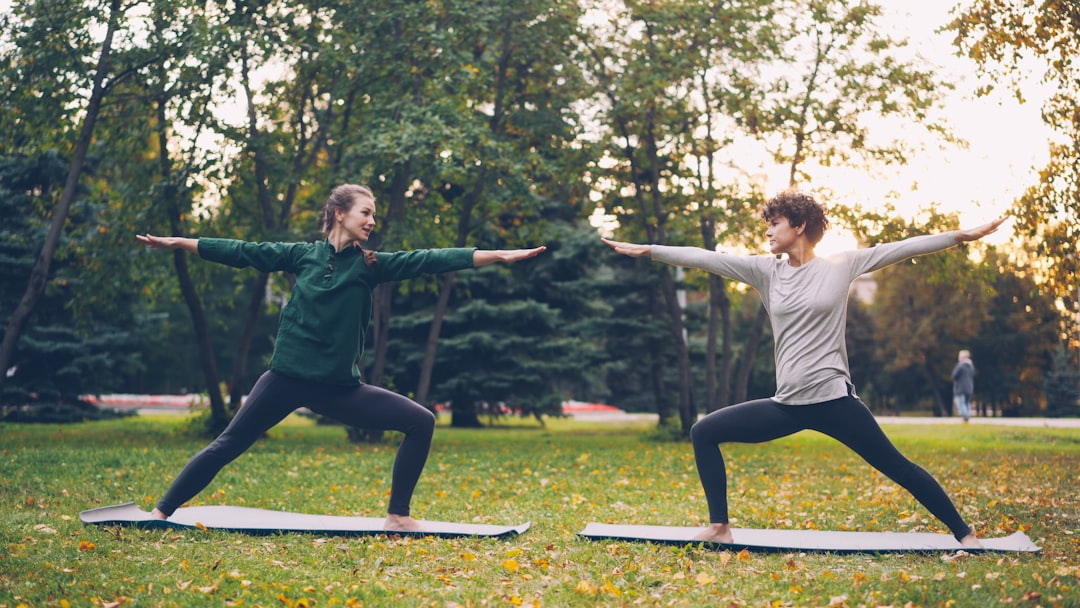
Mobility, Balance & Falls: The Overlooked Longevity Guide
Photo by Vitaly Gariev on Unsplash
Mobility and balance are among the strongest predictors of longevity, yet most people don’t start thinking about them until after a fall. That’s a problem. Evidence shows that measurable decline in balance, gait speed, and functional strength begins in your 40s — quietly, gradually, and almost entirely preventable if you act early enough. By the time most adults realize they’ve lost significant ground, they’ve already spent a decade or more in a slow, unnoticed decline that directly raises their risk of dying prematurely.
By The Longevity Dose Editorial Team · Evidence-reviewed · Last updated August 2026
Key Takeaways
- Falls are the leading cause of injury death in adults over 65 in the United States, according to the CDC — and the trajectory toward a dangerous fall starts decades earlier.
- A 2022 study in the British Journal of Sports Medicine found that failure to balance on one leg for 10 seconds in midlife was associated with an 84% higher risk of death from any cause over 7 years of follow-up.
- The 2025 ICFSR Global Consensus (published in the Journal of Nutrition Health and Aging, PMID 39743381) recommends multicomponent exercise — combining balance, strength, and aerobic training — as the single most effective intervention for preserving functional longevity in older adults.
- Most balance and mobility decline is not inevitable: targeted training, adequate protein, and a few simple daily habits can preserve and even restore functional capacity well into your 70s and beyond.
In This Guide
- Why Mobility and Balance Matter More Than You Think
- How Balance and Mobility Decline With Age
- The Four Self-Tests That Predict Your Longevity Risk
- The Science of Falls: Why They Kill and What Drives Them
- The Exercise Protocols That Actually Work
- Nutrition, Supplements, and Mobility
- Daily Habits That Build a Fall-Proof Body
- Evidence Rating and What We Still Don’t Know
Why Mobility and Balance Matter More Than You Think
Here’s a hard truth most longevity content skips over: you can have a perfect ApoB score, optimal VO2 max, and a pristine gut microbiome — and then fall on your stairs at 71 and never fully recover. Falls don’t just break bones. They break independence, trigger depression, accelerate cognitive decline, and, in a significant percentage of older adults, initiate a cascade of complications that leads to death within 12 months.
The CDC reports that falls are the leading cause of injury-related death in adults 65 and older in the U.S. More than 36 million falls occur among older adults each year, resulting in over 32,000 deaths annually. Those numbers dwarf the mortality from many conditions that get far more attention and research funding.
But here’s what makes this genuinely exciting from a longevity perspective: mobility and balance are trainable at almost any age. They respond to intervention faster than almost any other physical capacity. And the research on what works is, by longevity-science standards, remarkably clear.
Mobility and balance longevity isn’t just about not falling. It’s about preserving the physical competence to live fully — to hike with your kids, carry your groceries, travel without fear, and maintain the independence that defines quality of life in your later decades. Dr. Peter Attia frames this as the “Centenarian Decathlon”: defining the physical tasks you want to be able to perform at 85 and reverse-engineering your training from there. Balance and functional mobility sit at the center of that framework.
How Balance and Mobility Decline With Age
Balance is not one thing. It’s the product of several systems working together: your vestibular system (inner ear), your proprioception (sensors in your joints and muscles that tell your brain where your body is in space), your vision, and the neuromuscular response that translates all of that information into physical correction.
All of these systems decline with age. Proprioception degrades noticeably after 50. Vestibular function drops measurably after 60. Vision loss compounds both. And crucially, the speed at which your nervous system can process and respond to a balance threat slows significantly — meaning you can feel yourself falling before your body can do anything about it.
The Role of Muscle Loss
Sarcopenia, the age-related loss of muscle mass and strength, is the other major driver. Muscle isn’t just for lifting heavy things. Your calf muscles, hip stabilizers, and core are constantly firing micro-corrections dozens of times per minute just to keep you upright when you stand still. When those muscles weaken, your balance degrades even if your nervous system is perfectly intact.
A 2025 study published in Archives of Physiotherapy (PMID 40741288) found direct associations between ankle-foot strength and biomechanics during the heel-rise task and key functional outcomes in older adults, including balance control, functional mobility, and walking speed. In plain terms: the small muscles of your lower leg predict how well you move and how stable you are — and they’re among the first to go unnoticed as you age.
Spinal posture also plays a role. Research published in Osteoporosis International in 2024 (PMID 39172253) found that hyperkyphosis (excessive forward rounding of the upper back), forward head posture, and altered lumbar lordosis were meaningfully associated with increased fall incidence among older adults. These postural changes don’t happen overnight — they build over years of sedentary habits and are often already progressing by your 40s.
For a deeper look at how muscle loss connects to your broader longevity risk, the data in our muscle mass and longevity statistics roundup is worth reading alongside this guide.
The Four Self-Tests That Predict Your Longevity Risk
You don’t need a lab or a clinic to get a meaningful snapshot of where you stand right now. These four tests are used in research settings and are validated predictors of functional decline and mortality risk.
1. The Single-Leg Balance Test
Stand barefoot, lift one foot, and hold. Ten seconds with eyes open is the minimum threshold. A landmark 2022 study in the British Journal of Sports Medicine (Araujo et al.) followed 1,702 adults aged 51-75 and found that those who failed the 10-second single-leg balance test had an 84% higher all-cause mortality risk over a median 7 years of follow-up, independent of other health measures.
We’ve covered the full breakdown of targets by age and how to improve your time in our dedicated single-leg balance test guide.
2. The Walking Speed Test
Walk 4 meters at your normal pace. A speed below 0.8 meters per second in older adults is associated with significantly higher mortality and hospitalization risk. Above 1.2 m/s correlates with better-than-average longevity outcomes. This is one of the most replicated findings in geriatric medicine, and it’s deceptively simple to measure. Our walking speed longevity guide has the full protocol and benchmarks by age.
3. The Grip Strength Test
Grip strength is a proxy for total-body muscle health and neuromuscular function. A 2025 study in Scientific Reports (PMID 40328873) confirmed that grip strength correlates meaningfully with broader functional and metabolic health markers even in challenging clinical populations. For age-specific targets and testing methods — including grip strength longevity targets by age and what they mean for your long-term health — see our grip strength test by age chart.
4. The Sit-to-Stand Test
Sit cross-legged on the floor and stand up without using your hands, knees, or forearms. Each assist costs a point from a starting score of 10. Scores below 8 in adults under 60 are associated with higher mortality in research by Dr. Claudio Gil Araujo and colleagues at the Clinimex Exercise Medicine Clinic in Rio de Janeiro. This test loads hip mobility, core strength, and proprioception all at once — which is exactly why it predicts so much.
The Science of Falls: Why They Kill and What Drives Them
Falls are not random bad luck. They’re the endpoint of a predictable, measurable deterioration in the physical systems described above. Understanding this changes how you think about prevention.
Most falls in older adults happen during ordinary activities: walking on uneven surfaces, turning quickly, reaching overhead, getting up from a chair, or navigating stairs in low light. These aren’t extreme movements — they’re daily life. The fact that they become dangerous reflects just how significantly functional capacity can decline without visible warning signs.
The Cascade That Follows a Hip Fracture
Hip fractures deserve special attention. Roughly 300,000 Americans are hospitalized for hip fractures annually, according to the NIH. Within 12 months of a hip fracture, approximately 20-30% of older adults die — a figure comparable to many cancers. Those who survive often face permanent loss of independence, institutionalization, and accelerated cognitive decline.
Fear of falling is itself a risk factor. After an initial fall, many older adults restrict their activity to avoid another one — which deconditions them further, completing a vicious cycle. This is one reason why social isolation and longevity intersect with mobility: people who withdraw due to fall fear become more sedentary, more isolated, and ultimately more vulnerable.
Digital Fall Prevention: A 2025 Data Point
A 2025 nonrandomized interventional study published in JMIR Aging (PMID 40009847) examined a digitally delivered fall prevention exercise program for older adults. The study highlighted that even free, accessible exercise interventions are underused due to perceived barriers around safety and convenience — and that digital delivery can meaningfully close that gap. This isn’t a splashy finding, but it matters: the barrier to starting is almost entirely psychological and logistical, not physical. The exercises work. People just don’t do them.
The Exercise Protocols That Actually Work
This is where the evidence gets genuinely strong. Unlike many longevity interventions, the research on exercise for balance and mobility doesn’t rely on animal models or speculative mechanisms. We have dozens of well-controlled human trials and now a major international consensus to draw from.
The 2025 Global Consensus on Exercise Recommendations for Healthy Longevity published in the Journal of Nutrition Health and Aging (PMID 39743381) — representing the International Conference on Frailty and Sarcopenia Research — concluded that multicomponent exercise is the most effective approach for functional longevity in older adults. That means combining balance training, resistance training, and aerobic training rather than relying on any single modality.
Balance Training: What the Evidence Supports
Tai chi has the deepest evidence base for fall reduction specifically. Multiple meta-analyses have found it reduces fall rates by 20-45% in older adults at risk. It works by simultaneously training proprioception, reaction time, and the smooth coordination of movement — not just static balance.
Evidence strength: Strong (multiple human RCTs and meta-analyses for tai chi and structured balance training).
Practically speaking, you don’t need a tai chi class to start. These drills are effective and can be done at home in 10-15 minutes:
- Single-leg stands: 3 sets of 30 seconds per side, progress to eyes closed
- Tandem walking (heel-to-toe in a straight line): 10 meters, 3 passes
- Sit-to-stand from a chair: 5 reps, no hands, increasing pace over time
- Heel-rise calf raises: 3 sets of 15-20 reps — specifically supported by the 2025 Archives of Physiotherapy data (PMID 40741288)
- Lateral step-overs: step sideways over a low obstacle, training hip abductor activation
Resistance Training: The Non-Negotiable Foundation
You cannot build reliable balance without the muscle to execute it. Resistance training three times per week, targeting the posterior chain (glutes, hamstrings, calves) and hip stabilizers, is the foundation on which balance work sits. The ICFSR consensus recommends 2-3 sessions per week of progressive resistance training for older adults as a minimum effective dose.
For adults over 50, creatine monohydrate is worth knowing about here. Evidence shows it enhances the response to resistance training specifically in older adults — improving muscle mass, strength, and even some cognitive outcomes. Creatine for women over 50 has a full breakdown of the evidence and dosing. The effect size is meaningful and the safety profile is excellent at 3-5 grams per day.
Evidence strength for resistance training: Very strong (multiple large human RCTs, international consensus recommendations).
Zone 2 Cardio and Walking
Aerobic fitness underpins everything else. Low-intensity sustained cardio, sometimes called Zone 2 training, preserves mitochondrial health, maintains neuromuscular efficiency, and keeps the cardiovascular reserve you need to recover from physical challenges. Walking briskly for 30 minutes, five days per week, is the minimum dose supported by longevity evidence. If you want to understand how to calculate your exact Zone 2 range, our Zone 2 heart rate by age guide walks through every formula.
Rucking (weighted walking) deserves a specific mention here. Adding a light pack of 10-20% of your body weight while walking simultaneously builds posterior chain strength and cardiovascular conditioning — two of the most important inputs to fall prevention, as covered in detail in our guide to rucking for longevity over 50. It’s low-impact, scalable, and requires no gym.
Nutrition, Supplements, and Mobility
Exercise is the intervention. Nutrition is what makes the exercise stick.
Protein: The Most Underrated Mobility Nutrient
Muscle protein synthesis — the process by which exercise actually builds and repairs muscle — requires adequate dietary protein. Current evidence from the PROT-AGE study group and others suggests that adults over 60 need 1.2-1.6 grams of protein per kilogram of body weight per day, which is significantly more than standard dietary guidelines recommend.
Timing matters too. Spreading protein intake across meals, with at least 25-40 grams per sitting to clear the leucine threshold for muscle protein synthesis, appears more effective than loading protein at dinner. Our protein timing after 60 guide covers the research in detail.
Vitamin D and Calcium
Vitamin D deficiency is directly associated with muscle weakness and fall risk. The NIH estimates that over 40% of American adults have insufficient vitamin D levels. Evidence from multiple RCTs shows that supplementing deficient adults to sufficient levels reduces fall risk. The mechanism is partly skeletal (bone density) and partly neuromuscular: vitamin D receptors are found in muscle tissue, and adequate levels support muscle contraction speed and strength.
Most adults in northern latitudes need 1,000-2,000 IU per day to maintain adequate levels, but the right dose depends on your baseline blood level (25-OH vitamin D). Get tested before dosing aggressively.
Creatine, Omega-3s, and Collagen
Beyond protein and vitamin D, a few other nutrients have meaningful evidence specifically for the muscle and connective tissue systems that underlie mobility.
Creatine monohydrate at 3-5 grams per day enhances the strength and lean mass gains from resistance training in older adults. This is not hype — it’s one of the most replicated findings in sports science, and the data in older populations specifically is strong. You can find a quality third-party tested option like Thorne Creatine Monohydrate, which is NSF Certified for Sport, as a reasonable starting point.
Omega-3 fatty acids at high doses (2-4 grams EPA+DHA per day) have modest evidence for reducing the rate of muscle loss and preserving neuromuscular function. They also reduce systemic inflammation, which accelerates connective tissue degradation. Check our omega-3 index guide for testing and target ranges.
Collagen peptides (10-15 grams per day, taken with vitamin C around exercise) have emerging evidence for supporting tendon and joint health — which matters for mobility, though the evidence here is less robust than for creatine or protein. Evidence strength: Promising but limited (small human trials, mechanism plausible).
Daily Habits That Build a Fall-Proof Body
Training three times per week matters. But what you do the other 22 hours of every day matters almost as much.
Floor Time
Getting down to the floor and back up is one of the single most functional movements you can maintain. Many Western adults haven’t sat cross-legged on the floor in years — which means the hip mobility, ankle mobility, and core stability required to do so have quietly degraded. Aim for 20-30 minutes of floor-based activity per day: stretching, reading, playing with kids or grandkids. The anthropologist Dr. David Raichlen at USC has published work showing that hunter-gatherer populations maintain excellent metabolic and musculoskeletal health partly through the postural variety that modern seated lifestyles eliminate.
Postural Awareness
The 2024 Osteoporosis International study (PMID 39172253) found that hyperkyphosis and forward head posture were meaningfully associated with fall incidence — not just balance difficulty. These postural patterns are addressable. Daily thoracic extension work (a foam roller placed horizontally across the mid-back for 60-90 seconds), chin tucks, and face pulls with a resistance band are simple interventions with good mechanical rationale. Evidence strength: Low-moderate (associational data, mechanically plausible, minimal direct RCT evidence for these specific exercises on fall outcomes).
Sleep, Vision, and Medication Review
Three overlooked contributors to fall risk: poor sleep (which impairs reaction time and cognitive processing speed), uncorrected vision changes, and polypharmacy. Certain classes of medications — sedatives, blood pressure drugs, antidepressants, and antihistamines — meaningfully raise fall risk. If you’re over 60 and on four or more medications, a formal medication review with your doctor or pharmacist is one of the highest-yield safety interventions available to you. It costs nothing and can make a significant difference.
Home Environment
Roughly half of all falls in older adults happen at home, according to the NIH National Institute on Aging. Remove trip hazards (loose rugs, cluttered hallways), install grab bars in bathrooms, improve lighting, and consider non-slip mats in wet areas. These modifications are unsexy but evidence-backed. A Cochrane review of home safety modifications found they reduce fall rates, particularly in high-risk individuals with prior falls.
Evidence Rating and What We Still Don’t Know
Intellectual honesty matters here, so let’s be clear about where the evidence is solid and where it’s still developing.
| Intervention | Evidence Strength | Best Evidence Type |
|---|---|---|
| Multicomponent exercise (balance + strength + cardio) | Very Strong | Multiple RCTs, international consensus (PMID 39743381) |
| Tai chi for fall prevention | Strong | Multiple RCTs, Cochrane meta-analyses |
| Resistance training for muscle strength | Very Strong | Extensive human RCT data |
| Adequate protein intake (1.2-1.6g/kg) | Strong | Human RCTs and systematic reviews |
| Vitamin D supplementation (if deficient) | Moderate-Strong | Human RCTs (effect size varies by baseline level) |
| Creatine monohydrate (3-5g/day with training) | Strong | Multiple RCTs in older adults specifically |
| Omega-3s for muscle preservation | Promising but limited | Small human RCTs, larger trials ongoing |
| Collagen for tendon and joint health | Promising but limited | Small human trials, mechanism plausible |
| Home safety modifications | Moderate | Cochrane review (effect strongest in high-risk individuals) |
What we still don’t know well: the optimal dose and combination sequence for exercise interventions in adults under 50 who want to prevent future decline rather than treat existing deficit. Most trials have focused on adults already showing functional loss. The earlier-intervention data is sparser, which is one reason this area of preventive longevity medicine remains underdeveloped.
We also don’t yet have strong long-term data on whether proprioceptive training devices (balance boards, wobble cushions) meaningfully reduce falls compared to simpler body-weight balance work. They’re probably helpful, but the evidence doesn’t yet support paying a premium for them over consistent basic training.
For a broader look at the longevity exercise landscape, our complete longevity exercise guide covers the full hierarchy of training modalities and how they interact. And if you want to understand how these physical metrics fit into a broader biomarker tracking framework, the longevity biomarkers guide for 2026 is a logical next read.
The bottom line on mobility and balance longevity is this: no supplement, drug, or technology comes close to the mortality risk reduction available from simply maintaining your ability to move well, stand on one leg, and get up off the floor. These are not fitness metrics. They are survival metrics. And unlike your genetics or your ApoB trajectory, they respond dramatically to consistent effort, starting today.
For a framework that ties all of this together with a coherent longevity philosophy, Dr. Peter Attia’s work on the Centenarian Decathlon remains one of the most practical approaches available.
Affiliate Disclosure: The Longevity Dose may earn a small commission if you purchase through the links below, at no additional cost to you. We only recommend products that hold up to our reading of the evidence. Learn more.
What We Recommend
- Thorne Creatine Monohydrate. NSF Certified for Sport, creatine monohydrate at 3-5g daily is the most research-backed supplement for enhancing the strength and muscle gains from resistance training in adults over 50 — directly supporting the fall-prevention foundation this guide is built on.
- Outlive: The Science and Art of Longevity — Dr. Peter Attia. The most practical longevity book available in 2026, with an entire framework built around preserving physical function through your later decades — exactly the mindset this guide is designed to support.
Frequently Asked Questions
At what age should I start training for balance and mobility?
The best time to start is your 40s — before any noticeable decline has occurred. Proprioceptive sensitivity, muscle mass, and neuromuscular response time all begin declining in the fifth decade of life, but the decline is slow enough at that stage to be fully reversible with consistent training. Starting later still works; the response to balance and resistance training is documented even in adults in their 80s. Earlier just means more runway.
How long does it take to see improvement in balance?
Most people see measurable improvement in single-leg balance and functional tests within 4-8 weeks of consistent training (3-4 sessions per week). Neuromuscular adaptations are among the fastest in the body. Muscle mass changes take longer — typically 8-12 weeks of progressive resistance training to show meaningful gains. Don’t use short-term impatience as a reason to quit; the trajectory is reliable if you’re consistent.
Is the single-leg balance test really that predictive of mortality?
Yes, and this surprises most people. The 2022 British Journal of Sports Medicine study by Araujo and colleagues found an 84% higher all-cause mortality risk over 7 years in adults who failed a 10-second single-leg balance test — independent of age, sex, BMI, and other risk factors. The test doesn’t cause mortality; it reflects the accumulated health of your neuromuscular, cardiovascular, and metabolic systems. A poor score is a signal worth taking seriously.
Do I need special equipment to improve balance at home?
No. The most effective balance exercises (single-leg stands, tandem walking, sit-to-stand practice, heel raises) require no equipment. Balance boards and wobble cushions are potentially useful accessories, but the evidence doesn’t yet show they outperform consistent body-weight training. If you do want to add equipment, a resistance band and a sturdy chair for safety support are sufficient to run a comprehensive program.
Does creatine actually help with mobility and falls?
Creatine doesn’t directly improve balance, but it meaningfully enhances the muscle-building response to resistance training in older adults. Since muscle strength is one of the two foundational pillars of fall prevention (alongside proprioception), creatine’s indirect effect is genuinely relevant. The evidence for 3-5 grams per day in adults over 50 is strong, and the safety profile is excellent. It works best when combined with consistent resistance training — it’s not a standalone intervention.
What medications increase fall risk the most?
The highest-risk medication categories include benzodiazepines and sleep aids (which impair coordination and reaction time), blood pressure medications (which can cause orthostatic hypotension — a sudden drop in pressure when standing), antidepressants, antiepileptics, and first-generation antihistamines like diphenhydramine (Benadryl). If you’re over 60 and taking any of these regularly, discuss fall risk specifically with your prescribing doctor. A pharmacist-led medication review is often covered by insurance and can be highly valuable.
Liked This? Keep Reading.
Get the next post in your inbox. Real science on longevity, supplements, and fitness — no hype.
Drop your email below. Weekly. No spam. Unsubscribe anytime. ↓