Single-Leg Balance Test: What 10 Seconds Says About Your Lifespan
Photo by Heather Jacoby on Unsplash
By The Longevity Dose Editorial Team · Evidence-reviewed · Last updated July 2026
The single-leg balance test longevity connection is, in my opinion, the most underused piece of health information available to any adult over 40. You don’t need a lab. You don’t need a wearable. You stand on one leg, eyes open, and you count. If you can’t hold it for 10 seconds, research indicates something significant is happening to your body — and it’s not just about falling. A landmark 2022 study in the British Journal of Sports Medicine found that adults aged 51 to 75 who failed a 10-second single-leg balance test had an 84% higher risk of all-cause mortality over a 12-year follow-up period. That’s not a marginal association. That’s a number that should make you put down whatever you’re doing and stand up right now.
Key Takeaways
- Adults who fail a 10-second single-leg balance test have an 84% higher risk of all-cause mortality compared to those who pass, according to a 2022 BJSM study of 1,702 participants aged 51-75.
- A 2026 analysis from the English Longitudinal Study of Ageing found that balance performance declines sharply with age and differs significantly by sex — making age- and sex-specific norms essential for accurate self-assessment.
- Balance failure is not a balance problem. It’s a downstream signal of neuromuscular deterioration, reduced proprioception, and systemic aging — all of which are trainable at any age.
- Most people in the longevity space obsess over supplements and blood panels while ignoring a free, 10-second test that predicts mortality as well as many clinical biomarkers.
Why I Think the Longevity World Gets This Wrong
Here’s what frustrates me about how balance testing gets discussed: when it comes up at all, it gets filed under “fall prevention for seniors.” That framing is wrong. It buries a powerful longevity signal under a clinical label that makes healthy 45-year-olds think it doesn’t apply to them yet.
Balance decline doesn’t start at 75. Evidence shows it starts meaningfully in your 50s and accelerates through your 60s. The 2026 analysis of data from the English Longitudinal Study of Ageing — one of the largest population studies of physical performance in older adults, covering over 7,600 participants aged 50 and above — established age- and sex-specific reference values for balance alongside grip strength, gait speed, and sit-to-stand performance. That study confirms what clinicians see every day: the decline trajectory starts earlier and moves faster than most people expect.
Meanwhile, the people reading longevity content are spending real money on NMN, red light panels, and continuous glucose monitors while they can’t stand on one leg for 10 seconds. I’m not saying those interventions are worthless. But priorities matter. And right now, most people have them backwards.
Balance performance is closely related to grip strength as a functional biomarker — I’d encourage you to read our full breakdown of grip strength targets by age alongside this piece, because these two measures together tell a much richer story about how your body is aging than either does alone, and understanding grip strength longevity targets by age gives you a concrete benchmark to work toward.
What the Single-Leg Balance Test Actually Measures
Standing on one leg looks trivial. But what your nervous system is doing in that moment is anything but trivial. Staying upright requires continuous communication between your ankle mechanoreceptors, your inner ear, your cerebellum, your visual cortex, and your motor neurons. Every one of those systems degrades with age. Balance is where they all intersect.
A 2025 study in Archives of Physiotherapy examined the biomechanics of ankle-foot function in older adults and found clear associations between ankle-foot strength and both balance performance and walking speed. That research reinforces what the broader literature suggests: when balance starts declining, so does the underlying machinery that keeps you mobile, stable, and independent. The ankle complex is essentially the foundation. When it weakens, everything above it compensates — and those compensations show up as falls, as slow gait, as reduced confidence moving through the world.
So when someone fails a 10-second balance test, I don’t see a balance problem. I see a neuromuscular aging signal. I see proprioceptive decline. I see a person whose brain-body feedback loop is degrading faster than it should. And that degradation doesn’t stay confined to balance. It correlates with cardiovascular aging, neurological aging, and yes, mortality risk — which is exactly what the BJSM study showed.
The Targets You Should Know by Age
The 2026 English Longitudinal Study of Ageing data gives us a useful starting benchmark for adults 50 and over. Here’s a simplified summary drawn from the 2026 English Longitudinal Study of Ageing normative data, with eyes-closed figures included as an advanced reference:
| Age Range | Eyes Open Target | Eyes Closed (Advanced) |
|---|---|---|
| 40-49 | 40+ seconds | 15+ seconds |
| 50-59 | 30+ seconds | 8-10 seconds |
| 60-69 | 20+ seconds | 4-6 seconds |
| 70+ | 10+ seconds | Any stable hold |
These are targets, not cutoffs for panic. But if you’re in your 50s and struggling to hit 20 seconds, that’s a signal worth taking seriously — not in five years, right now.
The Counterargument: “Maybe It’s Just Confounding”
Fair point — and I’ve heard it. The argument goes like this: people who fail balance tests are probably also sicker, less active, carrying more chronic disease. The balance test isn’t predicting anything. It’s just picking up existing illness.
The researchers behind the 2022 BJSM study actually addressed this directly. They adjusted for age, sex, BMI, and the presence of cardiovascular disease, diabetes, and other comorbidities. The 84% elevated mortality risk held up after those adjustments. Balance failure wasn’t simply a proxy for being sick. It was an independent predictor.
That’s not to say it’s a perfect crystal ball. Observational data has limits. But an independent association with mortality after controlling for the major confounders tells you there’s something real here. And the biological mechanism isn’t mysterious. Neuromuscular aging, reduced proprioception, cerebrovascular changes — these are all upstream of both balance decline and mortality. The test is detecting physiological aging that standard clinical panels often miss.
This is exactly why I keep arguing — in pieces like our look at longevity biomarkers worth tracking in 2026 — that functional performance tests belong alongside your bloodwork, not below it in the priority hierarchy.
What the Balance Test Can’t Tell You (Being Honest Here)
I want to be precise about the limits of this evidence. The 2022 BJSM study was observational. It can show association; it can’t prove that improving your balance score will extend your life by a specific number of years. No randomized controlled trial has yet assigned people to “balance training” or “no balance training” and measured mortality over decades. That study doesn’t exist.
What we do have is strong mechanistic logic: training balance improves ankle proprioception, reduces fall risk, maintains neuromuscular function, and supports the kind of physical resilience that correlates with longer healthspan. And the broader exercise science for longevity consistently finds that functional capacity — not just cardio or strength in isolation — is one of the strongest modifiable predictors of how well and how long people live.
So my position isn’t “stand on one leg and you’ll live forever.” My position is: this test is a free, validated, 10-second window into your neuromuscular age. You should know your number. And if the number is poor, fixing it is likely one of the highest-return physical investments available to you.
What You Should Actually Do About It
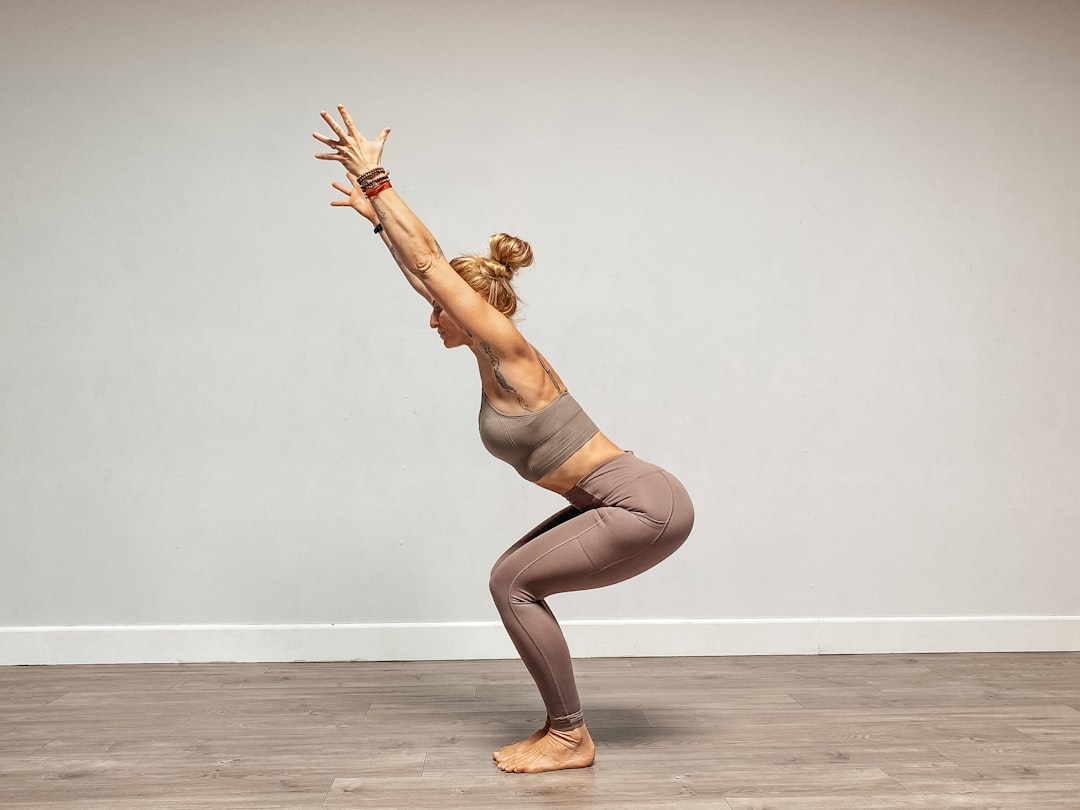
Start by doing the test properly. Stand barefoot. Lift one foot just off the floor so your knee is slightly bent. Keep your eyes open and focused on a fixed point. Count seconds until you touch down with the raised foot, grab something, or visibly lose control. Do both legs. Note the weaker side — asymmetry matters too.
If your score is poor, the fix isn’t complicated but it does require consistency:
- Daily practice: Three sets of max-hold on each leg, every morning. It takes four minutes. Don’t skip it.
- Progress to eyes closed: Once you hit 30+ seconds eyes open, start practicing eyes closed. This shifts the training load to your proprioceptive system rather than visual compensation.
- Add instability: A folded towel, a balance pad, or a BOSU board all increase the challenge once flat-ground balance becomes easy.
- Strengthen the foundation: Single-leg calf raises, single-leg Romanian deadlifts, and lateral step-ups all build the ankle and hip strength that underlies balance control.
- Walk on uneven surfaces: Grass, trail paths, and cobblestones force continuous proprioceptive adaptation in a way that a treadmill never will.
Creatine monohydrate is worth mentioning here too. Dr. Peter Attia discusses it in the context of preserving neuromuscular function in midlife, and the evidence supporting its role in maintaining muscle quality (which underpins balance) is robust. If you’re not supplementing, Thorne Creatine Monohydrate is the version I’d reach for — NSF Certified for Sport and straightforward to dose.
For the bigger picture on why functional tests like this one belong at the center of your longevity strategy, Dr. Attia’s framework in Outlive remains the clearest articulation I’ve found. His “Centenarian Decathlon” concept — working backwards from what physical capacities you’ll need at 80 — is exactly the right mental model for taking balance seriously in your 50s.
Retest every month. Track your time. Treat it with the same seriousness you’d give a blood panel result. Because it deserves exactly that.
Affiliate Disclosure: The Longevity Dose may earn a small commission if you purchase through the links below, at no additional cost to you. We only recommend products we genuinely believe in. Learn more.
What We Recommend
- Outlive: The Science and Art of Longevity — Dr. Peter Attia. If the single-leg balance test has you rethinking what physical capacity actually means for longevity, Attia’s Centenarian Decathlon framework is the most practical way to build a training strategy around it. Required reading for anyone serious about functional aging.
- Thorne Creatine Monohydrate. The most research-backed supplement for maintaining the muscle quality and neuromuscular function that underlies balance performance. NSF Certified for Sport, simple 5g daily protocol, no unnecessary fillers.
Frequently Asked Questions
What is the single-leg balance test and how do I do it correctly?
Stand barefoot on a flat surface. Lift one foot just off the floor so your knee bends slightly, without letting it touch the standing leg. Focus on a fixed point at eye level. Count how long you can hold the position without putting your foot down, grabbing a surface, or losing controlled posture. Do both legs. A fair test requires bare feet and a non-moving focal point — shoes and wall-touching both artificially inflate your score.
How long should I be able to stand on one leg for my age?
The 10-second threshold used in the 2022 BJSM mortality study was specifically associated with elevated all-cause mortality risk in adults aged 51 to 75. The 2026 English Longitudinal Study of Ageing provides age- and sex-specific reference values for adults 50 and over — check that paper directly for the figures that apply to you. Where you sit relative to your own age group matters far more than any single cutoff a blog can name.
Does improving your balance score actually reduce mortality risk?
No randomized controlled trial has yet proven that training your balance directly reduces mortality. The mortality association comes from observational data, which shows correlation but can’t definitively prove cause and effect. However, the biological mechanisms are sound: balance training improves neuromuscular function, reduces fall risk, and supports physical resilience — all of which are independently linked to better healthspan outcomes. Training balance is very low risk, costs nothing, and addresses a real physiological deficit. The argument for doing it is strong.
What’s the difference between testing eyes open vs. eyes closed?
Eyes-open balance relies heavily on visual feedback to stay upright, which partially compensates for proprioceptive decline. Eyes-closed testing removes that compensation and forces your proprioceptive and vestibular systems to carry the full load. Eyes-closed performance degrades much faster with age and is considered a more sensitive measure of neuromuscular aging. Once you can hold 30 seconds eyes open comfortably, eyes-closed practice becomes the more challenging and more valuable training stimulus.
Is the single-leg balance test as useful as grip strength for predicting longevity?
Both tests tap overlapping signals of neuromuscular aging, and both have independent associations with mortality in large population studies. Grip strength has a larger body of literature behind it. Balance testing has the advantage of capturing proprioceptive and cerebellar function that grip strength doesn’t. Used together, they give a more complete picture of functional aging than either test alone. Our detailed breakdown of grip strength targets by age covers the grip side of this equation in full.
How often should I practice balance training to see improvement?
Daily practice is ideal for neural adaptations — balance improvements are largely about retraining your nervous system, which responds well to frequent, short bouts rather than occasional long sessions. A short daily session of single-leg holds each morning — frequent enough to drive neural adaptation but brief enough to actually sustain — is a realistic starting point; the right volume for you depends on your current balance capacity and any physical limitations worth discussing with a clinician. Neural adaptations to balance training can appear relatively quickly — consistent daily practice tends to produce noticeable change well before any structural muscle gain would show up, though your own timeline will depend on your starting point and how regularly you train. Progress to eyes-closed holds and unstable surfaces once the flat-ground eyes-open test feels controlled and stable.
Liked This? Keep Reading.
Get the next post in your inbox. Real science on longevity, supplements, and fitness — no hype.
Drop your email below. Weekly. No spam. Unsubscribe anytime. ↓