
Longevity Exercise: The Complete Science-Backed Guide (2026)
Photo by Anastase Maragos on Unsplash
By Michael Fleming, Editor · Evidence-reviewed · Last updated November 2026
The best longevity exercise plan isn’t a single workout. It combines aerobic training, strength work, occasional hard efforts, and balance practice, because each protects a different system that declines with age. You might be wondering whether your current routine is enough, or whether it’s too late to start. Those are the right questions. Dr. Peter Attia, author of Outlive, frames the goal as training for your “Centenarian Decathlon”: the physical tasks you want to handle in your final decade. This guide covers what 2026 research supports, where it’s thin, and how to build a week you’ll actually stick with.
Key Takeaways
- Cardiorespiratory fitness predicts health and longevity, a point restated in a 2026 BMC Geriatrics study of fitness testing in older adults.
- A 2026 review in Progress in Cardiovascular Diseases separates physical activity, a behavior you control, from fitness, a trait shaped by activity and genetics.
- A balanced longevity exercise week includes strength training, easy aerobic work, one harder session, and daily balance practice.
- Lifespan is hard to test in randomized trials, so the strongest survival data on exercise is observational, while trials mostly measure function and fitness.
Why Does Longevity Exercise Matter More After 40?
Longevity exercise matters more after 40 because the systems it protects start declining quietly in midlife. Muscle mass and strength fall with age. Aerobic capacity drops too. And balance erodes so gradually that many people don’t notice until they stumble.
Physical reserve is the concept that ties this together. A 2026 review titled “Physical activity, fitness, and longevity” in Progress in Cardiovascular Diseases describes survival as integrating cardiovascular disease, competing non-cardiac risks, and physiological reserve. That reserve determines how well you withstand aging and illness.
In other words, exercise doesn’t just lower one risk. It builds the buffer you’ll draw on during a hospital stay, a fall, or a hard winter at 80. The strength you build at 50 is the reserve you spend later.
The good news is simple. Your body still adapts to training in your 50s, 60s, and beyond. It’s rarely too late to improve, although starting earlier gives you more runway.
What the Research Shows About Exercise and Aging
Exercise research spans everything from cell biology to large population studies. However, not all of it carries equal weight. Here’s what the newest papers say, and how strong each one is.
Cardiorespiratory fitness predicts health and lifespan
Cardiorespiratory fitness is one of the clearest signals in aging research. A 2026 study in BMC Geriatrics opens by stating that fitness predicts health and longevity. Its authors then tackled a practical problem: the gold-standard VO2-peak test is difficult to run in older adults.
That study tested seismocardiography, a sensor-based method, against lab testing in older people. It’s a single human study, so treat it as early. Still, it shows researchers want easier ways to measure fitness, because fitness matters so much.
Importantly, the Progress in Cardiovascular Diseases review draws a useful distinction. Physical activity is a modifiable behavior. Fitness, by contrast, reflects habitual activity plus genetics. Fitness is the measurement; activity is the lever you actually pull.
Exercise targets aging mitochondria
Mitochondria are the energy factories inside your muscle cells. A new systematic review and meta-analysis in Archives of Gerontology and Geriatrics describes what goes wrong in aging muscle. Mitochondrial function declines, redox balance shifts, and cells recycle damaged mitochondria less efficiently.
The researchers combined 28 studies, in both humans and rodents, to test whether exercise training remodels these changes and related function. The pooled results showed a significant improvement in VO2 max with training (standardized mean difference 0.46), while the pooled change in citrate synthase, a common marker of mitochondrial content, was not statistically significant. The authors caution that human and rodent findings are complementary evidence rather than equivalent estimates, and that no training type could be shown to be superior.
Healthspan trials measure function, not just disease
Healthspan means the years you live in good health. A 2026 systematic review in the Journal of Gerontology: Medical Sciences gathered randomized trials of interventions aimed at extending it. Notably, the authors focused on person-centered outcomes like intrinsic capacity and quality of life.
That framing matters for you. Exercise trials rarely run long enough to measure death rates. Instead, they track whether you can walk, climb, lift, and think well, which is exactly what you care about.
Epigenetic clocks: interesting, not decisive
Epigenetic clocks estimate biological age from DNA methylation patterns. A 2026 review in Frontiers in Genetics catalogued interventions that lower next-generation clock readings in humans. The authors, who report financial ties to a company that sells epigenetic age tests, acknowledge that these clocks remain investigational biomarkers.
So if a company promises exercise will “reverse your age by years,” be skeptical. A lower clock score is a promising signal. It isn’t yet proof you’ll live longer.
The Four Pillars of a Longevity Exercise Plan
A complete longevity exercise plan covers four distinct capacities. Each one fails differently with age, so skipping any pillar leaves a gap. Here’s how they compare.
| Factor | Zone 2 Cardio | High-Intensity Intervals | Strength Training | Balance and Stability |
|---|---|---|---|---|
| Main target | Aerobic base, mitochondria | Peak aerobic capacity | Muscle, strength, bone | Fall prevention, coordination |
| How it feels | Steady, can still talk | Hard, short bursts | Challenging final reps | Low effort, high focus |
| Simple progress marker | Faster pace at same effort | VO2 max estimate | Load lifted, grip strength | Single-leg stand time |
| Beginner risk | Low | Moderate; build a base first | Low with good form | Low near support |
Zone 2: your aerobic foundation
Zone 2 is steady aerobic work where breathing rises but conversation stays possible. Brisk walking, easy cycling, and rucking all count. The talk test works well: if you can speak in full sentences but wouldn’t want to sing, you’re close. For heart rate details, see our guide to Zone 2 training for longevity.
High-intensity intervals: raising your ceiling
Intervals push your heart near its upper limit for short stretches. They raise peak aerobic capacity, which easy work alone may not fully develop. However, they carry more strain. Build a few weeks of easy cardio first, and check with your doctor if you have heart concerns.
Strength training: the non-negotiable
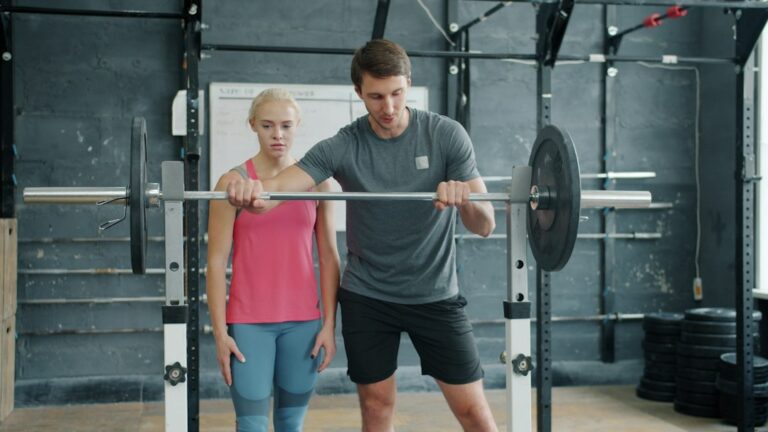
Strength training preserves muscle, supports bone, and keeps everyday tasks easy. Focus on big movement patterns: squat, hinge, push, pull, and carry. Our deep dive on strength training for longevity covers the evidence in detail. Because protein supports muscle repair, eating enough of it makes your lifting more effective.
Balance and stability: the forgotten pillar
Balance training gets ignored because it doesn’t feel like a workout. Yet falls can end independence fast. A few minutes of single-leg stands, heel-to-toe walking, or step-ups each day builds the reflexes you’ll need later.
Practical Protocol: A Starting Week for Longevity Exercise
This is our editorial starting template, not a prescription from a single study. For reference, World Health Organization guidelines for adults call for 150 to 300 minutes of moderate aerobic activity a week, or 75 to 150 minutes of vigorous activity, plus muscle strengthening on two or more days, and balance-focused training on three or more days for adults 65 and older. Adjust it to your fitness, joints, and schedule. If you’re new to training or have a medical condition, start lighter and talk to your doctor.
- Strength, two to three days. Do one exercise for each major pattern. Choose loads where the last few reps feel genuinely hard but your form holds.
- Easy aerobic work, most other days. Walk briskly, cycle, swim, or ruck. Keep the talk test in mind and stay conversational.
- One harder session, once you have a base. Alternate short hard efforts with easy recovery. Start conservatively and build over weeks.
- Balance, daily. Practice single-leg stands while brushing your teeth, near a counter for safety.
- Move between workouts. Break up long sitting with short walks. Activity outside the gym still counts.
How to progress without getting hurt
Progress slowly, changing one variable at a time. Add a little weight, a few minutes, or one more interval, not all three. Sore joints that linger are a signal to back off.
Recovery is part of the program, too. Sleep, protein, and easy days let adaptation happen. Furthermore, a wearable that tracks resting heart rate and HRV can help you spot when you’re under-recovered.
For a broader framework, Attia’s book Outlive explains how to work backward from the abilities you want at 90. In our editorial view, it’s a practical, readable guide to structuring training for the long game.
How to Tell If Your Training Is Working
Tracking a few simple markers keeps you honest. You don’t need a lab. You need consistency in how you measure.
- Aerobic fitness: Watch your VO2 max estimate or your pace at a fixed effort. Our VO2 max by age guide explains how to interpret it.
- Resting heart rate: A gradual drop over months often reflects improving fitness.
- Strength: Log your lifts. Steady gains, even small ones, mean you’re building reserve.
- Function: Retest single-leg balance, sit-to-stand ease, and walking speed every few months.
Wearable estimates aren’t perfect. That’s why trends over time matter more than any single reading.
What We Don’t Know Yet
Exercise is among the best-supported longevity tools available, but real gaps remain. Being clear about them helps you avoid overpaying for certainty nobody has.
- Exact optimal doses. Nobody knows the precise weekly mix of Zone 2, intervals, and lifting that maximizes lifespan for you specifically.
- Causation versus fitness genetics. Fitness partly reflects genes, as the Progress in Cardiovascular Diseases review notes. Some of its link to lifespan may not be fully modifiable.
- Lifetime randomized trials. These don’t exist for lifespan. Survival data comes mostly from observational cohorts.
- Biological age claims. Epigenetic clocks are still investigational. A better score is encouraging, not definitive.
- Whether more is always better. The upper end of training volume remains debated, especially for very high-intensity endurance work.
None of these gaps argue against training. They simply mean you should favor consistency over chasing a perfect formula.
Affiliate Disclosure: The Longevity Dose may earn a small commission if you purchase through the links below, at no additional cost to you. We only recommend products we genuinely believe in. Learn more.
What We Recommend
- Outlive: The Science and Art of Longevity by Dr. Peter Attia. The Centenarian Decathlon chapter is the clearest guide we know for turning longevity exercise into a plan built around your future abilities.
- Oura Ring. It tracks overnight HRV and resting heart rate, which helps you see recovery trends as you add strength and interval sessions.
- Thorne Creatine Monohydrate. If strength training is your priority, creatine is a well-researched add-on for muscle and strength; check with your doctor first if you have kidney concerns.
The Bottom Line
Longevity exercise works best as a mix, not a single favorite workout. Lift to keep muscle, train aerobically to build your engine, add some hard efforts, and practice balance daily. Start where you are, progress slowly, and measure what matters to your future self.
Frequently Asked Questions
What is the best type of exercise for longevity?
No single type of exercise is best for longevity. A strong plan combines strength training, steady aerobic work, occasional high-intensity intervals, and balance practice. Each targets a different system that declines with age, so skipping one leaves a gap.
Is it too late to start exercising for longevity at 60?
Starting exercise at 60 is not too late, because muscles, heart, and balance still adapt to training in later decades. Begin with lighter loads and easy aerobic work, then progress gradually. Check with your doctor first if you have heart, joint, or other medical conditions.
Is strength training or cardio more important for living longer?
Strength training and cardio protect different things, so you need both. Cardiorespiratory fitness is a strong predictor of health and longevity, while strength training preserves the muscle and bone that keep you independent. Treat them as partners rather than rivals.
How do I know if my exercise routine is improving my longevity?
You can track progress with simple markers: VO2 max estimates, resting heart rate, strength logs, and functional tests like single-leg balance and walking speed. Retest every few months under similar conditions. Trends over time matter more than any single reading.
Can exercise lower my biological age?
Some research catalogs interventions that lower epigenetic clock readings in humans, but those clocks remain investigational tools. A lower biological age score is a promising sign, not proof of a longer life. Focus on measurable fitness and function, which have clearer links to health outcomes.
Liked This? Keep Reading.
Get the next post in your inbox. Real science on longevity, supplements, and fitness — no hype.
Drop your email below. Weekly. No spam. Unsubscribe anytime. ↓