12 ApoB Blood Test Statistics That Will Shock You
Photo by mostafa jamei on Unsplash
By Michael Fleming, Editor · Evidence-reviewed · Last updated November 2026
We can’t honestly give you twelve shocking ApoB statistics, because only a handful of ApoB findings survive a source check today. So this roundup gives you five that link to real 2026 studies, plus the reasoning that makes them useful. The ApoB blood test counts the particles that drive plaque into your arteries, and Dr. Peter Attia has made it a centerpiece of his heart-risk framework. However, a number you act on has to be real. That’s why we’re printing five, not twelve.
Key Takeaways
- An ApoB blood test counts atherogenic particles, because each LDL, VLDL, IDL and Lp(a) particle carries a single ApoB protein.
- A 2026 Clin Chem paper (PMID 42201254) built a new ApoB reference method aligned with ISO 15193:2009 and ISO 17511:2020, after the older reference procedures stopped functioning.
- A 2026 Clin Chem study (PMID 42545673) tested whether comparing measured ApoB to estimated ApoB can flag the APOE ε2/ε2 genotype, which LDL cholesterol can miss.
- Many viral ApoB “statistics” online have no traceable source, so treat any target you can’t click through to as an opinion, not a fact.
Why we won’t print twelve ApoB numbers we can’t source
Statistics roundups get copied everywhere. That’s exactly why a made-up figure in one does so much damage. If a blog invents an ApoB threshold, you might skip treatment or start a drug based on it.
Our rule is simple. Every number below links to the study that contains it. Anything we couldn’t link, we dropped. In other words, a short list you can trust beats a long list you’d have to fact-check yourself.
Most importantly, the studies here are early or technical. None of them is a large outcomes trial. We’ll tell you plainly what each one can and can’t support.
What an ApoB blood test actually measures
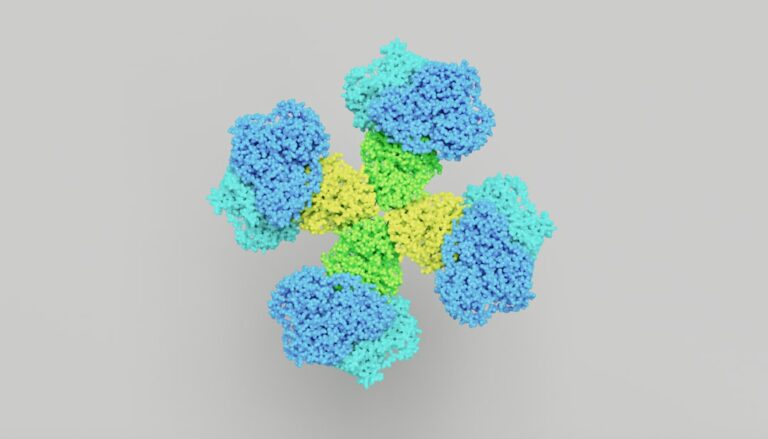
ApoB is a protein wrapped around the particles that carry cholesterol and fat through your blood. Each atherogenic particle carries one copy. As a result, measuring ApoB is effectively a particle count.
Standard LDL cholesterol works differently. It measures how much cholesterol sits inside LDL particles, not how many particles there are. That distinction matters because particles, not cholesterol mass alone, are what get trapped in the artery wall.
Furthermore, two people can share the same LDL cholesterol and carry very different particle numbers. Small, cholesterol-poor particles mean more particles for the same cholesterol reading. For a full breakdown, see our guide on why ApoB beats LDL for heart risk.
| Factor | ApoB blood test | LDL cholesterol (LDL-C) |
|---|---|---|
| What it measures | Number of atherogenic particles | Cholesterol carried inside LDL |
| Particles included | LDL, VLDL, IDL, remnants and Lp(a) | LDL only |
| Often estimated by formula? | No, measured directly | Often calculated from other lipids |
| Blind spot | Doesn’t show how much is Lp(a) | Misses particle number and remnants |
ApoB blood test accuracy: the lab-quality findings
Accuracy sounds boring. But a biomarker is only useful if two labs give you the same answer. These two 2026 studies tackle that problem directly.
1. ISO 15193:2009 and ISO 17511:2020: the new reference standards
A 2026 paper in Clinical Chemistry built a new reference method for measuring ApoB, aligned with ISO 15193:2009 and ISO 17511:2020 (PMID 42201254). The authors note that the previous reference procedures for ApoB standardization were no longer functional. Their new method uses liquid chromatography with mass spectrometry.
That means the anchor labs calibrate against is being rebuilt. This is lab-method work, not a patient outcome study. Still, it tells you ApoB measurement is getting more rigorous, not less.
Your action: track your ApoB at the same lab over time. Consequently, any change you see is more likely to reflect you, not a switch in testing method.
2. Dried blood spot vs. plasma: the finger-prick question
Another 2026 study compared dried blood spot and plasma ApoB measurements on a semi-automated analyser called the Chem7 (PMID 41799038). The goal was accessible lipid testing in resource-limited settings, without a venous draw or central lab.
Here’s the honest limit. The abstract we reviewed doesn’t let us quote an agreement figure, so we won’t. And results from one analyser don’t automatically apply to every home kit you can buy online.
Your action: if you use a finger-prick kit, confirm an unexpected result with a standard venous draw. Our guide to testing ApoB at home covers the trade-offs.
When ApoB reveals what LDL cholesterol hides
The strongest argument for ApoB is discordance. That’s when your particle count and your LDL cholesterol tell different stories. Two 2026 studies explore this from different angles.
3. The ε2/ε2 genotype: a hidden lipid disorder
Familial dysbetalipoproteinemia can develop in people who carry two copies of the APOE2 gene variant, written APOE ε2/ε2. According to a 2026 Clinical Chemistry study (PMID 42545673), this disorder slows the clearance of remnant lipoproteins. It also raises cardiovascular risk out of proportion to LDL cholesterol.
The researchers tested a screening idea: compare your measured ApoB to the ApoB predicted from a standard lipid panel. A mismatch could flag the genotype. Importantly, this is a screening method under evaluation, not a validated clinical rule yet.
Your action: if your triglycerides and cholesterol look odd but LDL-C looks reassuring, ask your doctor whether a remnant disorder is worth ruling out.
4. SYNTAX score and premature heart attack
A 2026 age-stratified study from Northeast India examined Lp(a), ApoB and the ApoB/ApoA1 ratio against the SYNTAX score in premature heart attack patients (PMID 42416767). The SYNTAX score grades how complex coronary blockages are. The authors start from the premise that conventional lipids may not reflect that complexity well.
This is a single regional study in people who already had a heart attack. As a result, it’s suggestive at best, and it can’t tell you whether testing healthy people prevents events.
Your action: if heart disease struck a parent or sibling young, pair your ApoB blood test with an Lp(a) test. Our guide on what your Lp(a) number means explains why.
ApoB testing if you have diabetes or take a statin
Statins lower the particles that ApoB counts. So if you’re on one, ApoB gives your doctor a direct read on how many atherogenic particles remain.
5. Atorvastatin, type 2 diabetes and ApoB
A 2026 cross-sectional study in Postgraduate Medicine looked at atorvastatin users with type 2 diabetes and no history of cardiovascular disease (PMID 42725625). It examined links between statin use, ApoB, ApoA1 and prothrombin time, a clotting measure. The question grew out of earlier observational work tying apolipoproteins to vitamin K-dependent clotting factors.
Cross-sectional means a snapshot in time. It can show associations but can’t prove cause. In other words, this is a research lead, not a reason to change your medication.
Your action: if you have type 2 diabetes, ask whether ApoB belongs on your routine panel alongside your A1C. Never adjust a statin dose on your own.
Your ApoB blood test decision checklist for 2026
Five studies won’t give you a target number. However, they do help you decide when an ApoB blood test adds real information. Use this table as a conversation starter with your doctor.
| If this describes you | What to ask for | Linked evidence |
|---|---|---|
| You’ve never had ApoB measured | Add ApoB to your next lipid panel | Mechanism: one ApoB per particle |
| Your lipids look odd but LDL-C seems fine | Measured vs. estimated ApoB; remnant workup | PMID 42545673 |
| Early heart disease runs in your family | ApoB plus Lp(a) | PMID 42416767 |
| You have type 2 diabetes or take a statin | ApoB to track residual particle burden | PMID 42725625 |
| You used a finger-prick kit | Confirm surprises with a venous draw | PMID 41799038 |
A worked example
Say your LDL cholesterol comes back in the range your doctor calls fine. Suppose your ApoB, measured at the same draw, looks higher than that LDL would predict. That gap is the discordance pattern these studies care about.
Next, you’d retest at the same lab to rule out a fluke. If the gap holds, you’d ask about remnant disorders and Lp(a). Then you and your doctor would weigh diet, exercise or medication against your overall risk, not against a single viral threshold.
What nobody can tell you yet
The ideal ApoB number for a healthy 45-year-old remains debated, and targets depend on your overall risk. Researchers like Dr. Allan Sniderman at McGill have argued for decades that ApoB should replace LDL-C in routine care. Even so, how low to go in low-risk people is a judgement call.
For deeper reading on this framework, Dr. Attia’s book Outlive explains why he treats atherosclerosis as a lifelong process. Our ApoB optimal range guide walks through how targets shift with risk.
The bottom line is clear. An ApoB blood test is cheap, direct and increasingly well standardized. What it can’t do is replace a conversation about your whole risk picture.
Affiliate Disclosure: The Longevity Dose may earn a small commission if you purchase through the links below, at no additional cost to you. We only recommend products we genuinely believe in. Learn more.
What We Recommend
- Outlive: The Science and Art of Longevity by Dr. Peter Attia. Attia’s chapters on atherosclerosis explain why he focuses on ApoB rather than LDL cholesterol alone. It’s a practical primer before you bring ApoB up with your doctor.
Frequently Asked Questions
What does an ApoB blood test measure?
An ApoB blood test measures apolipoprotein B, the protein on every LDL, VLDL, IDL and Lp(a) particle. Because each of those particles carries one ApoB, the result works as a count of artery-clogging particles. Standard LDL cholesterol, by contrast, measures cholesterol mass inside LDL particles.
Do I need to fast for an ApoB blood test?
Fasting rules vary by lab and by what else is on your order. Ask when you book, especially if ApoB is drawn alongside a full lipid panel. Whatever you choose, keep conditions consistent between tests so results stay comparable.
What is a good ApoB number?
No single ApoB target fits everyone, because the right number depends on your overall cardiovascular risk. Your age, blood pressure, diabetes status, smoking history and family history all shift the goal. Discuss your result with your doctor rather than relying on a threshold from social media.
Are at-home ApoB tests accurate?
A 2026 study (PMID 41799038) compared dried blood spot and plasma ApoB on one specific analyser, but its findings don’t automatically apply to every home kit. Accuracy depends on the kit, the lab and how well you collect the sample. Confirm any surprising home result with a standard venous blood draw.
Should I get an Lp(a) test along with ApoB?
Yes, if you can, because ApoB counts Lp(a) particles but doesn’t show how many of your particles are Lp(a). Lp(a) is largely set by your genes, so it’s often a test you may only need once. Ask your doctor, especially if early heart disease runs in your family.
Can I lower my ApoB without medication?
Diet changes that lower LDL cholesterol, such as replacing saturated fat with unsaturated fats, tend to lower ApoB as well. How much they help varies widely between people and depends partly on genetics. Retest after a few months of consistent changes to see your own response.
Liked This? Keep Reading.
Get the next post in your inbox. Real science on longevity, supplements, and fitness — no hype.
Drop your email below. Weekly. No spam. Unsubscribe anytime. ↓