Rucking for Longevity Over 50: Dose, Benefits & Protocol
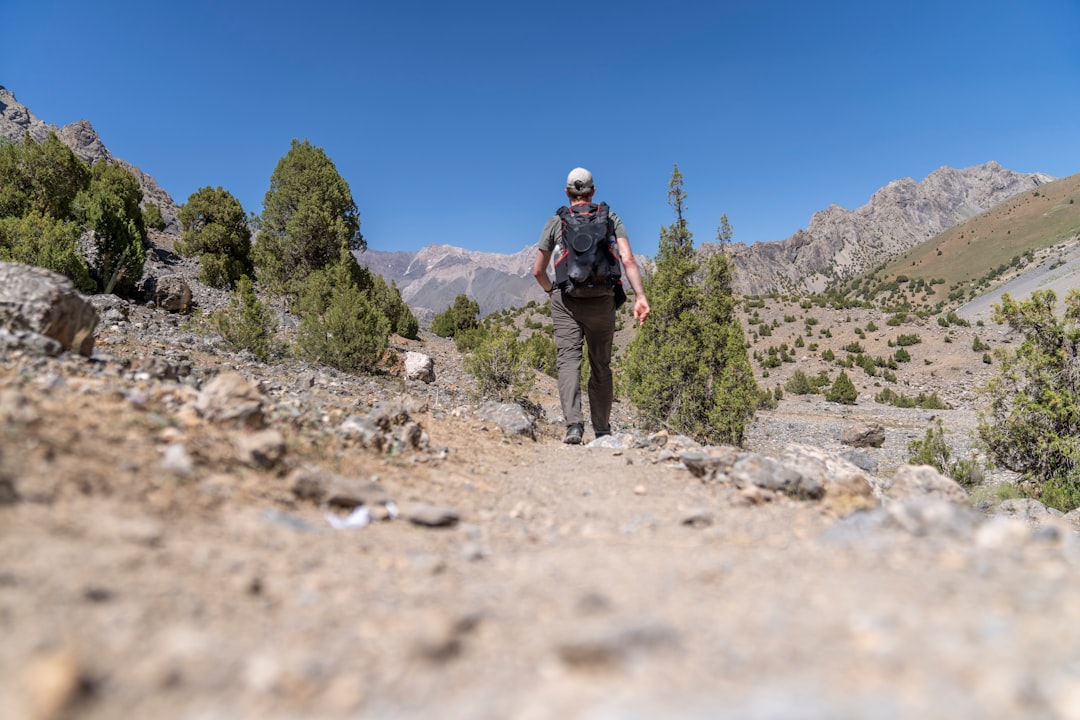
Photo by Hendrik Morkel on Unsplash
By The Longevity Dose Editorial Team · Evidence-reviewed · Last updated August 2026
Rucking for longevity over 50 hits something that most cardio simply doesn’t: it challenges your cardiovascular system, loads your bones, and forces your muscles to work under resistance, all at a pace that doesn’t wreck your joints. It’s essentially weighted walking. You put a loaded pack on your back and walk. That’s it. But the physiological payoff is surprisingly serious, and in 2026, the evidence from exercise science and military performance research makes a strong case that rucking belongs in almost every over-50 fitness plan.
Key Takeaways
- Rucking burns meaningfully more calories than regular walking at the same pace — because your body is moving extra weight with every step — making it a time-efficient cardio and muscle stimulus for older adults.
- A 2011 study published in the Journal of Strength and Conditioning Research found that load carriage at 30% of bodyweight significantly increases metabolic demand compared to unloaded walking at the same speed.
- A beginner rucking protocol for adults over 50 should start with 10-15 lbs (4.5-7 kg) for 20-30 minutes, two to three times per week, scaling load and duration over 8-12 weeks.
- Rucking is not a replacement for strength training, but it complements it well — the two together address the muscle loss and cardiovascular decline that drive early mortality after 50.
Why Rucking Makes Sense After 50
Most people over 50 are caught between two competing problems. Regular cardio (jogging, cycling) is great for the heart but does almost nothing for muscle mass. Traditional strength training builds muscle but gives minimal cardiovascular benefit. Rucking sits in between both, and that middle ground matters enormously as you age.
The physiology here is straightforward. Adding load to walking recruits more muscle fibers, particularly in the glutes, hamstrings, calves, and lower back. Your heart rate elevates into a range that corresponds to Zone 2 cardio or just above it, depending on pace and incline. Bone density responds to mechanical loading. And your postural muscles get continuous time under tension.
All four of those adaptations — muscle mass, cardiovascular capacity, bone density, and postural strength — decline with age and predict mortality risk. That’s not a minor overlap. That’s a direct hit on the primary drivers of physical decline in your 50s, 60s, and beyond.
Dr. Peter Attia, whose framework for longevity medicine has influenced how many physicians think about exercise, has spoken publicly about the value of what he calls the “Centenarian Decathlon.” The idea is that you need to train now for the physical demands you’ll want to meet at 80 and 90. Carrying a loaded pack in your 50s is essentially functional training for a longer, more capable life. His book Outlive: The Science and Art of Longevity goes deep on this framework and is worth reading if you want to understand the full reasoning.
What the Research Shows on Rucking and Longevity
It’s important to be honest here: there are no multi-decade randomized controlled trials on rucking specifically in adults over 50. Most of the direct rucking research comes from military populations, which skew younger and male. What we can do is connect the dots between solid evidence on its components.
Load Carriage and Metabolic Demand
A 2011 study in the Journal of Strength and Conditioning Research measured oxygen consumption in subjects walking with loads ranging from 10% to 30% of bodyweight. At 30% of bodyweight, the study found metabolic cost rose substantially compared to unloaded walking at the same speed — and even lighter loads produced a meaningful increase. Even at lighter loads (10-15% of bodyweight), the metabolic increase was substantial. For a 180 lb (82 kg) person, that’s just 18-27 lbs in a pack.
That caloric and cardiovascular demand, sustained over 30-60 minutes, produces the kind of stimulus that makes rucking genuinely useful for maintaining VO2 max as you age. VO2 max is one of the single strongest predictors of all-cause mortality — far stronger than most biomarkers people obsess over.
Bone Density and Mechanical Loading
Evidence shows that bone responds to mechanical stress. Weight-bearing exercise consistently outperforms non-weight-bearing exercise (swimming, cycling) for maintaining bone mineral density. Rucking adds axial load, meaning the spine and hips bear the weight directly. For postmenopausal women, where bone loss accelerates sharply, this matters more than almost any supplement currently on the market.
The consistent finding across load-bearing exercise research is that progressive mechanical loading preserves and, in some cases, builds bone density in older adults — and rucking delivers that loading in a low-impact, scalable format. Rucking delivers this loading in a low-impact, scalable format.
Muscle Mass and Sarcopenia Prevention
Sarcopenia, the age-related loss of muscle mass and strength, is one of the most reliable predictors of early death. If you haven’t read our breakdown of the sarcopenia warning signs that start appearing at 40, that’s worth doing alongside this piece. Rucking isn’t a substitute for resistance training, but it does impose meaningful muscular demand, especially on the posterior chain. Combined with adequate protein intake, that’s a meaningful anti-sarcopenia strategy.
Rucking vs. Other Forms of Exercise: A Quick Comparison
| Factor | Rucking | Regular Walking | Jogging |
|---|---|---|---|
| Joint Impact | Low-moderate | Low | High |
| Muscle Stimulus | Moderate | Low | Low-moderate |
| Bone Loading | High | Moderate | High |
| Cardiovascular Benefit | Moderate-high | Moderate | High |
| Accessibility Over 50 | High | Very high | Low-moderate |
| Equipment Cost | $40-150 (pack + plates) | Minimal | Minimal |
What We Don’t Know Yet
Honest answer: the rucking-specific longevity literature is thin. Most studies use younger adults, military recruits, or short intervention windows. We don’t have good data on optimal load-to-bodyweight ratios specifically for adults over 60, or on long-term joint outcomes in people who ruck heavily for decades.
There’s also limited research on rucking in people with existing joint disease, osteoporosis, or vertebral compression issues. If you have any of those conditions, this is a conversation for your orthopedist before you load a pack and head out the door.
What we can say with confidence is that the component mechanisms — load-bearing exercise, Zone 2 cardio, posterior chain training — all have strong independent evidence for longevity benefit. Rucking combines them in a single, accessible activity. That’s a reasonable basis for a practical recommendation, even in the absence of a decades-long rucking-specific RCT.
The Practical Protocol: Rucking for Longevity Over 50
This protocol is based on available load carriage research, general exercise physiology, and the principle of progressive overload applied conservatively to an older adult population. Don’t rush the load progression. The most common rucking mistake after 50 is adding too much weight too soon.
Phase 1: Foundation (Weeks 1-4)
- Load: 10 lbs (4.5 kg). Use a well-fitted backpack with a hip belt to transfer load off the spine.
- Duration: 20-30 minutes per session.
- Frequency: 2 sessions per week, on non-consecutive days.
- Pace: Conversational. You should be able to hold a sentence without gasping.
- Terrain: Flat surfaces only. Pavement or packed trail.
Phase 2: Building Load (Weeks 5-8)
- Load: Increase to 15-20 lbs (7-9 kg) if Phase 1 felt manageable.
- Duration: 35-45 minutes per session.
- Frequency: 2-3 sessions per week.
- Pace: Slightly faster. Aim for a 3.0-3.5 mph pace on flat ground.
- Terrain: Introduce mild incline — a small hill or a treadmill at 3-5% grade.
Phase 3: Maintenance (Weeks 9 onward)
- Load: a weight you can carry with good posture for the full session without pain in your back, hips, or knees. For longevity purposes, moderate and sustainable beats heavy and heroic.
- Duration: 45-60 minutes per session.
- Frequency: 2-3 times per week, fitting alongside 2 strength training sessions.
- Terrain: Vary it. Hills, trails, and inclines increase the cardio and muscle demand meaningfully.
One practical note: if you’re also doing strength training (which you should be, given what the evidence shows about strength training and longevity), program your ruck sessions on the same day as strength training or on recovery days with lower pack weight — and if you’re wondering whether the time of day you exercise affects longevity outcomes, that’s worth considering when scheduling both. Don’t stack a heavy ruck on a hard leg day.
Gear: What Actually Matters
You don’t need expensive gear. But you do need a few things:
- A pack with a hip belt (transfers load to hips, not just the spine).
- Weight plates or sand bags that sit high and close to your back, not dangling low.
- Supportive footwear with good heel cushioning. Trail runners work well. Heavy boots aren’t necessary unless you’re on rough terrain.
For tracking your sessions and progress, keeping a simple log of load, duration, and heart rate gives you the feedback loop you need. If you’re using an HRV monitor, check your morning HRV values to spot accumulating fatigue before it becomes an injury.
Rucking and Recovery After 50: The Part People Underestimate
Recovery takes longer after 50. That’s not pessimism — it’s physiology. Your muscle protein synthesis response to exercise is blunted compared to a 25-year-old, and connective tissue repair is slower. This is precisely why the protocol above starts conservatively and spaces sessions out.
To support recovery, protein intake matters considerably. How much protein you need after 60 depends on your bodyweight, your training load, and your kidney health — it’s a number worth establishing with a clinician who can see your labs, not one a blog can hand you. If you’re unsure where you stand, our guide on how much protein you actually need after 60 has the specific numbers and food examples.
Sleep is the other non-negotiable. The National Institute on Aging consistently highlights sleep as a core pillar of healthy aging — and inadequate sleep blunts both cardiovascular adaptation and muscle repair. Don’t undercut your rucking gains by cutting sleep short.
Balance work is worth adding alongside rucking, particularly for fall prevention. A loaded pack shifts your center of gravity, and training your stabilizers helps. The single-leg balance test is a quick self-check for where you stand right now.
Affiliate Disclosure: The Longevity Dose may earn a small commission if you purchase through the links below, at no additional cost to you. We only link products and books with a genuine research track record. Learn more.
What We Recommend
- Outlive: The Science and Art of Longevity — Dr. Peter Attia. If rucking has piqued your interest in training for a longer life, this is the book that provides the full strategic framework. Dr. Attia’s Centenarian Decathlon concept will change how you think about exercise after 50.
- Thorne Creatine Monohydrate. Creatine is among the most well-supported supplements for preserving muscle mass and strength in older adults — a natural companion to a rucking protocol. NSF Certified for Sport, meaning it’s third-party tested for purity.
Frequently Asked Questions
How much weight should I carry when rucking over 50?
How much load to start with and how quickly to progress depends on your current fitness, joint health, and how your body responds — a conservative starting point and slow progression matter far more than hitting any particular number on a timeline. The goal for longevity isn’t maximum load — it’s consistent, sustainable training over years, and most people will find that moderate, manageable loads deliver the cardiovascular and bone-loading benefit without meaningful injury risk. The goal isn’t maximum load — it’s consistent, sustainable training over years.
How often should I ruck for longevity benefits?
How often you should ruck depends on your recovery capacity, your other training, and how your joints respond — start with two sessions a week on non-consecutive days, and let your body tell you whether it can handle more. This frequency allows enough recovery between sessions while producing a meaningful cardiovascular and musculoskeletal stimulus. Spacing sessions on non-consecutive days, especially when you’re starting out, reduces overuse injury risk significantly.
Can rucking replace strength training?
No, and you shouldn’t try to make it do so. Rucking provides cardiovascular benefit and some muscular demand, but it doesn’t produce the progressive overload needed to meaningfully build or preserve muscle mass the way resistance training does. Use rucking alongside 2 strength sessions per week, not instead of them.
Is rucking safe if I have knee or back problems?
It depends on the nature and severity of your condition. Rucking adds axial load to the spine and increases demand on the knees, so it’s not appropriate for everyone with joint issues. If you have a history of disc herniation, vertebral fractures, or significant knee arthritis, consult your physician or a physical therapist before starting. Many people with mild joint issues do fine with low loads (10 lbs) on flat terrain.
Does rucking help with bone density after menopause?
Evidence indicates that weight-bearing exercise with axial loading (where the skeleton bears the weight) preserves and can improve bone mineral density. Rucking qualifies as such an exercise. For postmenopausal women experiencing accelerated bone loss, rucking is a reasonable complement to other bone-protective strategies, though it’s not a substitute for medical management of osteoporosis if that’s already a diagnosis.
What’s the difference between rucking and weighted walking?
The terms are effectively interchangeable. “Rucking” comes from the military term for a pack (rucksack) and typically implies carrying a backpack with weight plates or sandbags. Weighted walking using a vest is a close variation. Both produce similar physiological effects. A properly fitted rucksack with a hip belt is generally preferable to a weight vest for beginners over 50 because it allows better weight distribution and is easier to scale.
Liked This? Keep Reading.
Get the next post in your inbox. Real science on longevity, supplements, and fitness — no hype.
Drop your email below. Weekly. No spam. Unsubscribe anytime. ↓