
Exercise Timing and Longevity: Does Time of Day Matter?
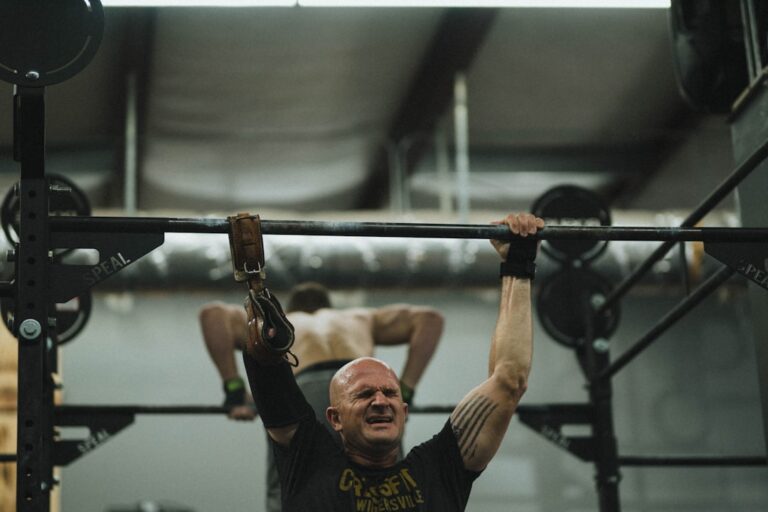
Photo by Daniel Hering on Unsplash
The connection between exercise timing and longevity is real, but it’s more nuanced than the “morning workout wins” headlines suggest. Whether you train at 6 AM or 7 PM, the most important variable is still the total volume of movement you accumulate each week. That said, a large 2026 prospective cohort study published in the European Journal of Preventive Cardiology found that timing patterns of moderate-to-vigorous physical activity do appear to be independently associated with mortality risk — and your chronotype may determine which timing window works best for you.
By The Longevity Dose Editorial Team · Evidence-reviewed · Last updated September 2026
Key Takeaways
- Total exercise volume matters more than timing for longevity outcomes — no timing window compensates for too little movement overall.
- A 2026 study of 75,509 UK Biobank participants found that diurnal timing patterns of moderate-to-vigorous physical activity were associated with mortality risk independently of total activity volume.
- Your personal chronotype (whether you’re naturally a morning or evening person) likely moderates which exercise window delivers the best physiological signal — so “morning is best” isn’t universally true.
- The honest answer is that timing research is still early; the evidence is observational and doesn’t yet support rigid scheduling over simply exercising consistently.
Why the Timing Question Matters for People Over 40
Most longevity-focused adults have already accepted that exercise is non-negotiable. The question now is whether squeezing a workout into a particular window — before breakfast, during lunch, or after work — actually changes biological outcomes. It’s a fair question. Your body’s circadian system regulates hormone release, core temperature, inflammation signaling, and cardiovascular response, all of which interact with how your muscles and heart respond to a training session.
After 40, these interactions become more clinically relevant. Cortisol naturally peaks in the early morning. Core temperature reaches its high around late afternoon. Testosterone and growth hormone pulse differently across the day. For anyone trying to preserve muscle, protect the heart, or keep metabolic markers in a healthy range, the idea that timing might amplify or blunt these effects deserves an honest look. As our guide on longevity exercise science covers, the type and dose of exercise you choose is the primary driver — but timing may be a useful secondary lever once the basics are in place.
What the Research Actually Shows About Exercise Timing and Longevity
The 2026 UK Biobank Study: The Best Evidence We Have
The most directly relevant data comes from a 2026 prospective cohort study published in the European Journal of Preventive Cardiology. Researchers followed 75,509 UK Biobank participants aged 40 to 73 years, using wrist-worn accelerometry to objectively measure when — not just how much — they moved. The key finding: diurnal timing patterns of moderate-to-vigorous physical activity were associated with mortality risk independently of total activity volume.
Crucially, the study also examined whether these associations differed by chronotype and sleep midpoint. That’s a meaningful design choice, because it acknowledges that a 6 AM run might be physiologically appropriate for an early riser and genuinely disruptive for someone whose natural sleep cycle runs later. This is a cohort study, not a randomized controlled trial, so it can’t prove causation. But with a sample size of over 75,000 participants using objective wrist accelerometry rather than self-reported questionnaires, the signal is worth paying attention to.
The Cardiorespiratory Fitness Layer
A 2026 narrative review in the Journal of Clinical Medicine reinforces a broader point: the architecture of optimal exercise for longevity is more complex than any single weekly volume target can capture. The review identifies dose, modality, and timing across the lifespan as variables that appear to interact with cardiorespiratory fitness outcomes — though the authors note the evidence base is still developing and no single activity target emerges as universally optimal across individuals. This aligns with what our deep-dive on VO2 max as a longevity predictor covers — fitness capacity matters enormously, and timing may be one of the inputs that shapes how efficiently you build that capacity over years.
Both studies are honest about their limitations. The narrative review is not a meta-analysis or RCT. Neither paper tells you to set your alarm for 7 AM. What they do suggest is that timing is a real variable, not marketing noise, and that its effect depends on individual biology.
Morning vs. Evening Exercise: What Physiology Says
The Case for Morning Training
Morning exercise consistently shows advantages in population-level data for cardiovascular outcomes. Core body temperature is lower in the morning, which some researchers believe creates a stronger adaptive signal when you raise it through training. Morning training also tends to be more consistent — people who exercise before their day starts are less likely to skip it as obligations pile up.
For metabolic health, some evidence suggests morning exercise in a fasted or low-glycogen state may enhance fat oxidation, though this hasn’t been cleanly linked to longevity outcomes in humans. If you’re tracking your glucose with a continuous monitor (our breakdown of whether a CGM is worth it for non-diabetics walks through when this makes sense), you may notice that morning sessions produce a more pronounced metabolic response than identical evening sessions.
The Case for Evening Training
Counterintuitively, muscle strength, power output, and exercise capacity tend to peak in the late afternoon and early evening for most people. Core temperature is higher, reaction time is faster, and perceived exertion is lower, meaning you can often lift heavier or run faster at 5 PM than at 6 AM. For preserving muscle mass after 40 — which our piece on sarcopenia warning signs explains is one of the most consequential longevity variables — training at peak neuromuscular readiness may produce superior strength adaptations over time.
The old concern that evening exercise disrupts sleep appears to be overstated for moderate-intensity training. High-intensity sessions close to bedtime may still cause problems for some people — a buffer of roughly one to two hours is a reasonable working target based on the available literature, though the research hasn’t established a single clean threshold and the right gap is likely individual — but the blanket prohibition on evening exercise doesn’t hold up for most adults. Sleep quality remains critical — if evening training genuinely degrades yours, that’s a real cost. But if it doesn’t, evening exercise is not second-best.
Chronotype Changes Everything
The 2026 UK Biobank study’s attention to chronotype is the most practically important finding in recent timing research. Evening types (natural night owls) who force themselves into early morning training may be exercising against their circadian biology — and the physiological benefits may be partially offset by the stress of circadian misalignment. Morning types who schedule their only available time slot after dinner face a similar mismatch, though usually a milder one.
The honest takeaway: timing matters, but the optimal timing is individual. Your chronotype, your sleep schedule, and your consistency all interact. A suboptimal time slot you actually use will always outperform a perfect time slot you skip.
Does Fasted Exercise Deserve Its Own Category?
Many longevity-focused adults train fasted in the morning, partly for metabolic benefits and partly because it fits intermittent fasting protocols. The honest answer is that fasted training’s direct effect on longevity biomarkers in healthy adults remains unclear. There are plausible mechanisms — enhanced AMPK activation, modestly greater fat oxidation — but clean human trial data linking fasted exercise specifically to longevity outcomes isn’t there yet.
What is clear: if fasted training reduces your performance to the point where you’re getting a substantially lesser training stimulus, you’re trading a theoretical metabolic signal for a real reduction in fitness adaptation. For most people over 50 focused on building and maintaining muscle, training quality matters more than the fed/fasted state.
What We Don’t Know Yet
The timing literature has real gaps. Most of the stronger studies are observational, which means they can identify associations but can’t rule out confounding. People who exercise at consistent times tend to have more structured lives overall — better sleep, lower stress, more stable eating patterns — and those factors independently affect mortality. Separating timing’s effect from these confounders is genuinely difficult.
Randomized controlled trials that assign healthy middle-aged adults to morning vs. evening training over years and then track longevity-relevant biomarkers don’t yet exist at meaningful scale. The mechanistic circadian biology is compelling, but translating it into a specific protocol recommendation is premature. Consider timing one optimization to layer on top of the fundamentals — not a substitute for volume, intensity, and consistency.
A Practical Protocol: Exercise Timing After 40
Based on the current evidence, here’s a reasonable framework. It doesn’t require you to overhaul your schedule — it asks you to make one intentional choice and then hold it consistently.
- Identify your chronotype honestly. If you tend to wake early without an alarm and feel alert relatively quickly, you’re likely a morning type and will probably benefit from morning training. If your natural wake time runs noticeably later and mornings feel like a struggle, early morning sessions may be working against your circadian biology.
- Consistency at a suboptimal time beats inconsistency at the optimal one. This is not a platitude — the mortality data consistently show that total activity volume is the dominant variable.
- Prioritize strength training at your peak neuromuscular window. For most people, this is mid-morning to early evening. If you can only strength train in the morning, it’s still worth doing — but if you have flexibility, scheduling resistance work when your nervous system is fully online is a reasonable choice. For support with the strength side, Dr. Peter Attia’s Outlive is the most practically useful book on this topic available right now.
- Aim to finish high-intensity sessions well before bedtime — a buffer of one to two hours is a reasonable working target, though the right gap is likely individual and the research hasn’t established a single clean threshold. This applies especially if you track HRV or know you’re sensitive to late-day stimulation. Zone 2 cardio is generally fine closer to sleep for most adults.
- Track your sleep quality when you change timing. If shifting your workout window degrades your sleep, the net longevity effect is likely negative. Sleep disruption accelerates biological aging through mechanisms that exercise can’t easily offset.
Affiliate Disclosure: The Longevity Dose may earn a small commission if you purchase through the links below, at no additional cost to you. We only recommend products we genuinely believe in. Learn more.
What We Recommend
- Outlive: The Science and Art of Longevity — Dr. Peter Attia. Dr. Attia’s framework for structuring exercise across decades is the most evidence-grounded practical guide available, including how to think about training dose, timing, and the “Centenarian Decathlon” approach to staying functional into old age.
- Thorne Creatine Monohydrate. If you’re strength training at any time of day, creatine monohydrate is the most research-backed supplement for maintaining muscle and supporting cognitive function after 40 — and Thorne’s NSF Certified for Sport formulation is one of the most trusted on the market.
Frequently Asked Questions
Does morning exercise actually reduce mortality risk more than evening exercise?
The 2026 UK Biobank study of 75,509 participants found that timing patterns of moderate-to-vigorous physical activity were associated with mortality risk independently of total volume. However, the associations appear to differ by chronotype, meaning morning timing isn’t universally superior. Total activity volume remains the strongest predictor of mortality risk across all timing windows.
Is it bad to exercise at night?
For most adults, moderate-intensity evening exercise doesn’t significantly disrupt sleep. High-intensity training very close to bedtime may raise core temperature and cortisol enough to delay sleep onset in sensitive individuals, but this varies widely. If your HRV or sleep quality drops after evening sessions, shifting your timing earlier is worth testing.
What is chronotype, and does it affect when I should exercise?
Chronotype describes your natural tendency toward earlier or later sleep and wake times. It’s largely genetically determined and shifts with age. Evidence suggests that exercising in alignment with your chronotype — morning for natural early risers, later in the day for night owls — may optimize the physiological benefits of training by avoiding circadian misalignment stress.
Should I train fasted for longevity benefits?
Fasted training has plausible metabolic mechanisms, including enhanced fat oxidation and AMPK activation, but direct human evidence linking fasted exercise to longevity outcomes is limited as of 2026. If fasted training reduces your workout quality or makes strength sessions less effective, the practical cost likely outweighs the theoretical metabolic benefit — particularly after age 50 when preserving muscle mass is a priority.
How important is exercise timing compared to total exercise volume?
Total volume is clearly the dominant variable. No timing strategy compensates for too little movement overall. Timing appears to be a secondary variable that may modestly optimize outcomes once you’re already meeting volume targets, but the evidence doesn’t support rigid scheduling at the expense of consistency or enjoyment.
Does exercise timing interact with sleep quality?
Yes, and this interaction runs in both directions. Poor sleep can blunt the adaptive response to training, making your sessions less effective regardless of timing. And high-intensity late-night exercise can degrade sleep quality in susceptible people, creating a counterproductive cycle. Protecting sleep is as important as protecting training time — both are longevity levers.
Liked This? Keep Reading.
Get the next post in your inbox. Real science on longevity, supplements, and fitness — no hype.
Drop your email below. Weekly. No spam. Unsubscribe anytime. ↓