What Is GDF11? The Longevity Protein Scientists Are Watching
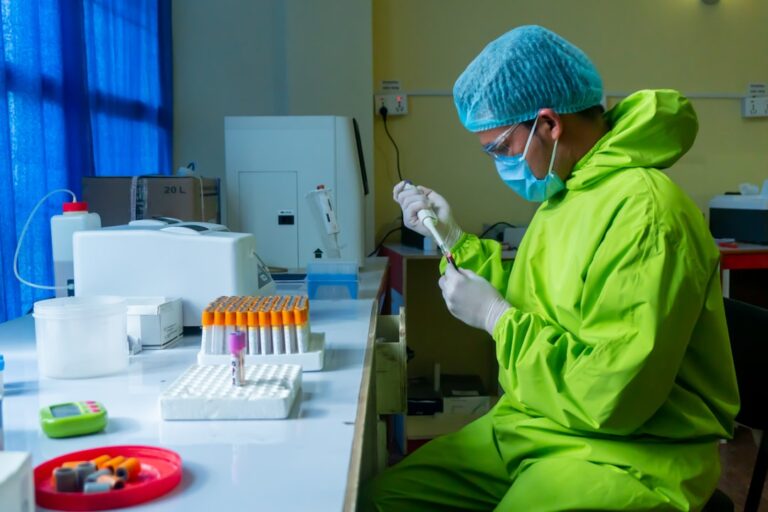
Photo by National Institute of Allergy and Infectious Diseases on Unsplash
By The Longevity Dose Editorial Team · Evidence-reviewed · Last updated September 2026
GDF11 (Growth Differentiation Factor 11) is a circulating protein in your blood that declines as you age and has become one of the most debated signals in longevity research. It belongs to the TGF-beta superfamily, a group of proteins that regulate cell growth, tissue repair, and organ maintenance throughout your lifespan. The GDF11 longevity protein hypothesis holds that restoring youthful levels might reverse some aspects of aging in the heart, brain, and muscle. But as of 2026, the evidence is far more complicated and contested than the early headlines suggested. This post lays out exactly what we know, what we don’t, and what it might mean for you practically.
Key Takeaways
- GDF11 is a blood-borne signaling protein in the TGF-beta family that declines with chronological age and plays a role in regulating tissue regeneration and organ homeostasis.
- Animal studies — including landmark parabiosis experiments at Harvard — sparked excitement by suggesting GDF11 could reverse heart and brain aging, but later research found serious methodological disputes, and direct human evidence remains thin as of 2026.
- There is no clinically validated GDF11 supplement, injection, or protocol available to the public; the protein is not available as a consumer product and cannot be meaningfully raised by any proven intervention today.
- The most honest framing is that GDF11 is a scientifically important lead in the biology of aging, not a proven anti-aging therapy — the hype ran far ahead of the data.
Why the GDF11 Longevity Protein Matters
Your blood doesn’t just carry oxygen and nutrients. It carries hundreds of signaling proteins that tell your organs how to behave. Researchers call these “circulating factors,” and their composition changes measurably as you age. The key question in longevity science is: does that change in composition drive aging itself, or does it just accompany it?
GDF11 sits at the center of that question. It’s one of the proteins identified in proteomic studies of aging blood, and its decline with age has made it a candidate for what scientists call a “pro-youthful” factor. If old blood becomes harmful partly because it loses GDF11, then in theory, restoring it could push tissues back toward a younger state.
This isn’t just theoretical curiosity. Research into circulating factors directly influences how scientists think about interventions like plasma exchange, exercise-induced blood factor changes, and even the broader parabiosis literature. Understanding GDF11 also helps you understand why Klotho and other circulating proteins are under such intense investigation right now.
The practical stakes are real. If specific proteins in your blood are actively maintaining youthful organ function, then the goal shifts from simply measuring biological age to understanding which signals are doing the work and whether any of them can be safely manipulated.
The Science Behind GDF11: How It Works
GDF11 is produced primarily by the pancreas, kidney, and nervous system. Once it enters circulation, it binds to receptors on cells throughout the body and activates a signaling cascade called the SMAD pathway. This pathway regulates gene expression related to cell differentiation, tissue maintenance, and the suppression of excessive cell proliferation.
In plain terms: GDF11 helps tissues know when to repair themselves and when to stop growing. That balance is critical. Too little, and tissues may fail to regenerate. Too much, and you risk signaling problems in muscle and other organs. This dual nature is part of why the research has gotten messy.
The Parabiosis Experiments That Started Everything
The excitement around GDF11 exploded after a series of experiments at Harvard, primarily from the lab of Dr. Amy Wagers, published between 2013 and 2014. In these studies, researchers used a technique called parabiosis, surgically connecting the circulatory systems of young and old mice so they shared blood. Old mice connected to young mice showed apparent rejuvenation in heart muscle thickness, skeletal muscle regeneration, and some measures of brain function.
GDF11 was identified as a candidate factor responsible for some of these effects. Specifically, the Wagers lab found that injecting older mice with GDF11 appeared to reverse age-related cardiac hypertrophy (thickening of the heart muscle) and improve some aspects of muscle stem cell function.
That was remarkable enough to make international headlines. But science rarely ends there.
The Dispute That Followed
Within two years, a competing lab at Novartis raised serious methodological challenges. Their team, led by Dr. David Glass and colleagues, published findings indicating that GDF11 actually increases with age in mice (using different antibody assays) and that GDF11 inhibits muscle stem cell function rather than helping it. Their work suggested the earlier findings may have been complicated by cross-reactivity of the antibodies used to measure GDF11 with a closely related protein called GDF8 (myostatin).
GDF8, or myostatin, is a well-established inhibitor of muscle growth. Confusing the two proteins in measurements would produce very different conclusions. The field spent several years trying to resolve this dispute, and as of 2026, the picture is still not fully settled in humans.
This is not a scandal. It’s how science actually works. But it matters a great deal if you’re deciding whether to spend money chasing GDF11 as a supplement or therapy.
What the Research Actually Shows in 2026
Honest answer: the human evidence for GDF11 as a longevity intervention is preliminary and indirect.
The most relevant human data comes from proteomic studies of aging blood. A 2024 study published in Aging Cell (PMID 38440820) used two large population-based prospective cohorts to examine the proteomic signature of longevity, defined as survival to age 90. This kind of work identifies proteins whose circulating levels associate with exceptional longevity. Studies like this are important because they move the conversation from mice to people, but they identify associations, not causes. A protein that’s higher in long-lived people may be a consequence of their health, not a driver of it.
Animal studies in mice remain the bulk of the direct GDF11 evidence. Some of those studies show promising tissue-level effects. But animal studies, particularly those done in mice, do not reliably predict what will happen in humans. The history of longevity research is full of interventions that extended mouse lifespan and failed to translate. This is a critical caveat to hold onto.
There are no published human clinical trials as of September 2026 that have directly administered GDF11 to people and measured longevity outcomes. None. That’s not a reason to dismiss the science, but it’s an essential fact to state plainly.
GDF11 connects to broader themes you’ll recognize if you’ve read about sarcopenia and muscle loss with aging. The biology of what signals govern muscle regeneration is directly relevant to maintaining functional strength across decades. But the intervention pathway for GDF11 specifically isn’t available to consumers yet.
How to Apply What We Know: Practical Considerations
Here’s the honest position: there is no validated GDF11 supplement, no approved injection, and no protocol that demonstrably raises your GDF11 in a clinically meaningful way as of 2026. Anyone selling “GDF11 support” supplements is running well ahead of the science.
That said, there are things that influence circulating factors associated with youthful blood biology broadly, and they’re worth doing regardless of GDF11’s specific role.
Exercise Is the Most Evidenced Lever
Aerobic exercise, particularly sustained moderate-intensity cardio, influences a wide range of circulating factors in ways that track with better tissue function and lower biological age. Exercise timing and intensity matter too. We don’t know that exercise specifically raises GDF11, but it does alter the circulating protein environment in broadly favorable directions. This is not a placeholder advice point. It’s the most robustly supported intervention we have for almost every aging pathway under investigation.
Resistance Training Protects What GDF11 Is Theorized to Support
If GDF11 is involved in muscle stem cell regulation, then the downstream tissue outcome it theoretically protects is muscle mass and regenerative capacity. Resistance training directly supports both. Check our complete guide to preventing sarcopenia after 40 for specific protocols. This is where the practical benefit lives right now, even if the GDF11 mechanism stays contested.
Watch This Space for Clinical Trials
Several research groups are working on recombinant GDF11 analogs and related TGF-beta pathway modulators. If a human trial publishes credible findings, we’ll cover it here. Until then, the appropriate posture is informed interest, not action on GDF11 specifically.
Affiliate Disclosure: The Longevity Dose may earn a small commission if you purchase through the links below, at no additional cost to you. We only link products and books with a genuine research track record. Learn more.
What We Recommend
- Outlive: The Science and Art of Longevity — Dr. Peter Attia. GDF11 sits within a broader framework of circulating factors and biological aging that Dr. Attia’s book covers better than almost anything else published. His “Medicine 3.0” framework gives you the conceptual structure to evaluate emerging science like GDF11 without getting taken in by hype.
- Lifespan: Why We Age — David Sinclair. Dr. Sinclair’s information theory of aging is the best lay explanation of why proteins like GDF11 matter at a systems level. Essential context for anyone who wants to understand why blood-borne signals are central to aging biology, not peripheral to it.
Common Misconceptions About GDF11
Misconception 1: “GDF11 supplements are available and proven to work”
They’re not. GDF11 is a protein. Oral proteins are broken down in digestion before they reach circulation. Any capsule claiming to deliver GDF11 is almost certainly not delivering the active protein intact to your bloodstream. And even if it could, we don’t have human dosing data. This is a straightforward biological reality, not a matter of brand quality.
Misconception 2: “Young blood transfusions work because of GDF11”
The parabiosis findings were real but their interpretation is disputed. Young blood contains hundreds of circulating factors, not just GDF11. We don’t know which ones are responsible for which effects, whether those effects are durable, or whether the same biology applies in humans at all. The commercial “young plasma” clinics that operated for a period were not evidence-based and drew regulatory warnings. This is separate from the legitimate ongoing research.
Misconception 3: “GDF11 decline is the primary cause of muscle loss with aging”
Muscle loss with aging, or sarcopenia, has multiple well-established drivers: declining anabolic hormones, reduced protein synthesis, inflammation, mitochondrial dysfunction, and insufficient protein intake and resistance training. GDF11 is a theoretical contributor to the regulatory environment for muscle stem cells, but it is not established as a primary cause of sarcopenia in humans. Acting on the well-established causes is far more productive than waiting for GDF11 clarity. See our post on strength training and longevity for what actually moves the needle.
Misconception 4: “The science on GDF11 is settled and positive”
It is neither. The field produced a significant scientific dispute between top research groups, the measurement methodology is still being refined, and the human data is observational at best. Settled science on a longevity protein looks like the exercise literature. GDF11 is nowhere near that level of evidence yet. That’s fine. It’s early. But describing it as proven would be wrong.
Frequently Asked Questions
What does GDF11 actually do in the body?
GDF11 is a circulating signaling protein that binds to cell receptors and activates pathways regulating cell differentiation, tissue repair, and organ maintenance. It appears to influence how tissues respond to damage and how stem cells are activated during regeneration. Its exact role in human aging remains under active investigation, with different research groups reaching different conclusions about whether it promotes or inhibits certain tissue functions.
Can you take a GDF11 supplement?
No validated GDF11 supplement exists as of 2026. GDF11 is a protein, and proteins taken orally are digested into amino acids before they reach the bloodstream intact. No product currently available to consumers can demonstrably raise circulating GDF11 levels in a clinically meaningful way. Any supplement claiming to be a “GDF11 booster” is not supported by the current evidence.
How does GDF11 relate to GDF8 or myostatin?
GDF11 and GDF8 (myostatin) are closely related proteins in the same TGF-beta family and share significant structural similarity. This similarity caused measurement problems in early research, where some antibody assays couldn’t reliably distinguish between the two. Since myostatin is a well-known inhibitor of muscle growth, confusing the two proteins in measurements led to conflicting results across different labs, which is a central reason the GDF11 field remains contested.
Is there any way to influence GDF11 levels naturally?
There’s no proven method for specifically raising GDF11 in humans through lifestyle or supplementation as of 2026. Regular aerobic and resistance exercise does influence the broader circulating protein environment in beneficial ways, but whether GDF11 specifically responds to exercise in humans hasn’t been established with reliable measurement methods. The practical advice is to focus on interventions with strong independent evidence, like exercise, protein intake, and sleep, rather than trying to target GDF11 specifically.
Why did early GDF11 research generate so much excitement?
Parabiosis experiments at Harvard, where old mice connected to young mice showed apparent reversal of heart enlargement and improved muscle regeneration, pointed to GDF11 as a candidate “youthful factor” in blood. The implication that a single circulating protein might reverse aspects of aging was scientifically thrilling and generated major media coverage. Subsequent research complicated that picture significantly, revealing measurement disputes and contradictory findings that the field is still working through.
How does GDF11 fit into the broader longevity protein landscape?
GDF11 is one of many circulating proteins whose age-related changes are being studied as potential biomarkers or intervention targets. It fits alongside proteins like Klotho, GDF15, and various inflammatory cytokines in a growing map of how blood composition changes with age. Evidence from proteomic studies, including a 2024 paper in Aging Cell examining the protein signature of survival to age 90, suggests that mapping these factors may eventually identify real intervention targets, but translating that map into therapies for humans is still an early-stage project.
Liked This? Keep Reading.
Get the next post in your inbox. Real science on longevity, supplements, and fitness — no hype.
Drop your email below. Weekly. No spam. Unsubscribe anytime. ↓